
Minimums force you to pay for “dead stock” you don’t need; no-minimum orders allow you to pay only for your current team size.
Updated Mar 28, 2026
3 Tips for Affordable Team Gear Solutions
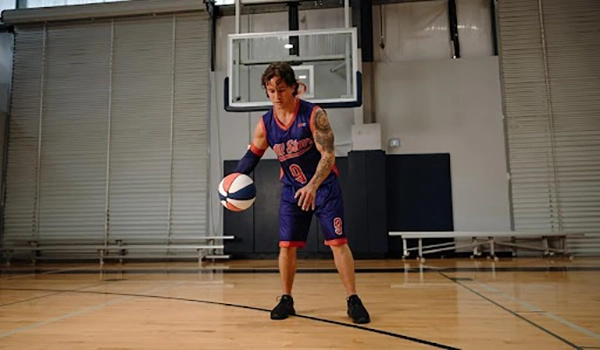
Small Biz Owners get to reach out and impact a larger audience through their “team” as they participate in local leagues and community events, where they can create a brand’s local footprint.
Unfortunately, investing in custom apparel often looks like a financial challenge instead of an opportunity. So small biz owners have to compete with other immediate operational expenses. By 2026, outfitting your “team” to represent the brand does not have to cost you a fortune or put you at risk for having to sit on boxes of “dead stock”.
If you use intelligent financial strategies when procuring custom apparel, you can add value to your “team” by creating unity and visibility for the brand while not spending a lot of money. Regardless of whether you are sponsoring a local team or purchasing corporate marathon shirts for employees, these three tips will guarantee that your custom apparel investment is an asset rather than a sunk cost.
Key Takeaways
- Replace traditional suppliers with those that do not require minimums, so that budgets are utilized only for exactly what is needed by team members.
- Focus on sublimated products and top-quality fabrics so that mid-season replacements do not create a “false economy”.
- Use customized gear as an asset to promote your brand and attract local sponsors.
- Using “pay after proof” arrangements enables you to approve your designs before committing funds from your organization.
1. Skip Minimums and Order What You Need
The painted-for-profit sector, which has used the ‘business logic of bulk’ for so long, has forced companies to over-order to meet stringent minimum order requirements. For a startup or boutique company, if you have eight members on your team and are required to purchase at least 50 shirts, you take a hit right away for your efficiency.
Changing to a supplier that does not require a minimum order fundamentally alters your financial spreadsheets as follows:
- Precision Pricing: Costs scale accurately to your actual needs, whether you are ordering three replacement units or orchestrating a full-team rollout.
- Reduced Waste: You no longer pay for “dead stock” or unneeded units that end up sitting in storage.
- Flexible Scaling: Programs can order exactly what they need, when they need it, without being penalized for smaller roster sizes.
Evaluating specialized vendors can easily streamline this overall procurement process. Sourcing options like Sports Gear Swag’s custom basketball jerseys alongside other flexible suppliers ensures organizations only pay for exact roster spots. This flexibility proves especially valuable for youth coaches managing tight league budgets and fluctuating registration numbers.
Pro Tip: Utilize a pay after proof model before committing your budget. Reviewing a free design preview of your exact colors and logos eliminates upfront financial risk and ensures perfect alignment.
2. Avoid Cutting Quality Corners for Team Morale
Saving on the initial invoice is only going to fail if the items don’t survive the season. In athletic and team gear, inexpensive quality materials represent a ‘faux economy’ to owners of athletic teams.
The majority of inexpensive basics may not be true to size the first time they are worn after cleaning (ex: a “large” may actually be a smaller size), AND most inexpensive basics do not hold up well after multiple cycles of being washed. Therefore, when you have to replace them, you will see a 46% increase of unaccounted for replacement costs over time.
Apparel quality directly impacts athletic performance and overall team mindset. The better the uniform looks, the better the representative looks. The better the representative looks, the better their confidence is.
- Performance fabrics are strictly required for high-level play, with Poly Mesh remaining the standard for court sports.
- Poly Knit provides the smooth and flexible construction required for soccer kits.
- Football uniforms necessitate heavily reinforced stress points to prevent tearing.
- Full sublimation printing is the optimal choice for vibrant designs, ensuring prints will not crack or peel through washing.
Always verify the specific fabric composition and printing method before approving a quote. Ensuring high quality will help your apparel meet intense performance demands.
Warning/Important: Avoid the false economy of low-quality uniforms. Choosing substandard fabrics to save upfront costs almost always leads to mid-season replacements. Insist on fade-resistant, fully sublimated printing.
3. Turn Uniforms Into a Walking Billboard
Custom team apparel holds significant value far beyond the field of play. For businesses, this is an opportunity to generate “passive” brand impressions at community events and across social media.
Corporate America can establish passive branding at community events and social media, because many American families currently invest $1,016 annually into their child’s main sport, the Director needed to find a solution that saved them money.
The club saved the families’ pay $139 in sign-up fees because of sponsorships.
The unexpected return on investment materialized off the field almost immediately. The unified aesthetic prompted parent volunteers to adopt matching team hoodies and gear. This created a highly recognizable sideline presence that reinforced the club’s brand throughout the region.
Building this cohesive identity requires a procurement strategy encompassing a comprehensive lineup of sports equipment.
Key Insight: Viewing apparel as a strategic branding investment rather than a sunk cost changes the game. Cohesive gear builds community recognition and significantly increases your appeal to local sponsors.
The Bottom Line
Ultimately, having a successful team in place is achieved through more efficient purchase management by purchasing the correct number of uniforms at the time of purchasing, versus simply ordering many at once. By avoiding bulk orders in favor of durable sublimation, you can enhance the life of your uniform investment based on the level of wear from usage.
Looking at each uniform as an investment enables you to realize positive returns based on your initial investment. Today, start to create a gear program that allows your team members to look great while using good stewardship of their capital.
Author - Dushyant K

Finance Writer
Related Posts


