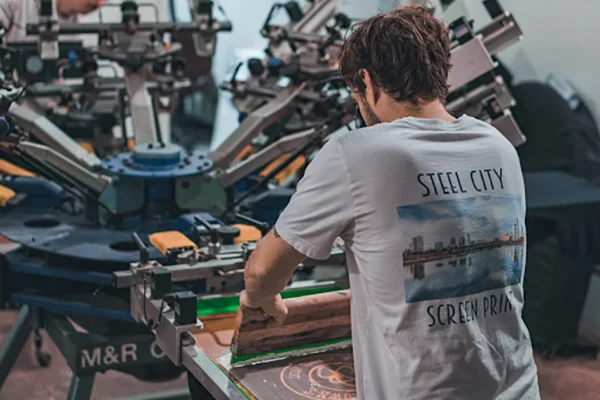
Screen-printing. Sure, it costs a bit to get started, but once the set-up’s done, each shirt is really cheap to print—especially when you’re making a lot.
Updated Nov 4, 2025
From Design to Delivery: A Financial Timeline & Cost Breakdown for Bulk Custom T-Shirt Orders

Ordering custom t-shirts in bulk is much more than a creative endeavor. It’s an economic venture that incorporates design planning, logistics, design thinking, and cost analysis.
You may be delivering fun merchandise to a corporate-sponsored event, developing a new spirit-wear fundraiser for your school, or executing the marketing campaign for your brand.
The trick is to understand and know the various ways to lower costs from design to delivery is key for profitability and avoiding broken budgets.
Every aspect of the custom order process, from selecting the materials and printing option to logistics and production timelines, affects budget and delivery.
By breaking down all the charges associated with these options against your funding milestones, you can find better purchasing options and maintain cash flow.
KEY TAKEAWAYS
- Consider the key-budget stages before planning.
- This begins with pre-production and design.
- After packing, payment scheduling and delivering on time is vital.
- Check out the cost-breakdown and unit pricing for profitability.
Planning Your T-Shirt Printing Order: Key Budget Stages
Your budget should outline three major phases: pre-production, production, and logistics. Each phase has specific cost items.
In the design/pre-production phase, you may spend money on creating the artwork, blank garment sourcing, and selecting your print method. Blank garments may cost USD $7-10 each for basic cotton tees in small runs, with tri-blends starting at USD $9-13.
Next, in the production stage you’ll pay for the actual T shirt printing, set-up fees, color-count complexity, number of print locations, and quantity discounts. For instance, the bulk orders of “off-color” front imprint garments can cost USD $5-$7 per shirt on most common garments.
Phase 1: Pre-Production & Design (Weeks 0–2)
At the outset, you’ll commission a designer (or use in-house) to create your artwork. Budgeting here means: designer fee (~USD $50-$ 300, depending on complexity), proofing rounds, and finalizing file format for printing.
After the design is approved, you select the blank garments. The base cost per shirt might be USD $7-10 for a standard cotton tee, and USD $9-13 for a premium tri-blend.
You’ll also decide the printing method (screen-printing, DTG, heat-transfer). Screen-printing is most cost-effective at scale but requires set-up; DTG suits small runs but has higher per-unit cost.
During weeks 0-2, you will use approximately 10-15% of your total budget for design + garment sourcing. Example: ordering 200 shirts at USD $8 blank cost = USD $1,600, and designer fee USD $150 → pre-production around USD $1,750.
Phase 2: Production & Decoration (Weeks 2–4)
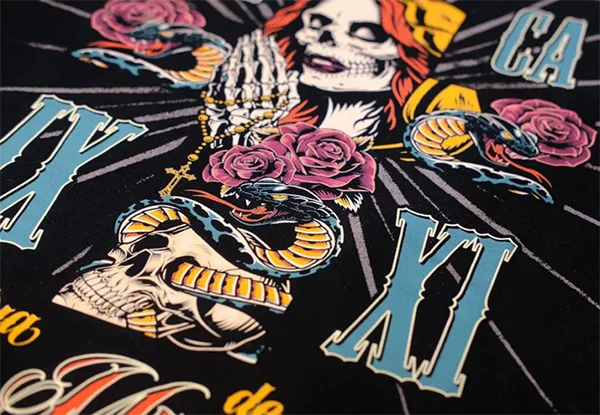
In this phase the decoration (printing) happens. If using screen-printing, set-up fees apply (one screen per ink colour) and extra costs for multiple print locations (front, back, sleeve).
For a bulk order, typical pricing: basic shirts with off-color front imprint range USD $5-$7 each. Premium garments or multi-location imprints can hit USD $8-$15 per unit.
4imprint.com
Let’s illustrate: you order 500 cotton tees with an off-color front print at USD $6 each = USD $3,000. Add a set-up fee of USD $150.
So production cost ~USD $3,150. If you instead go tri-blend with full-colour front+back at USD $12 each = USD $6,000 + set-up USD $300 = USD $6,300. Often, the price per shirt drops with quantity discounts.
Quantity discounts often reduce per-unit cost; for example in the UK context order of 1,000 units may drop cost from £5 to ~£3.50 each.
You should budget ~60-70% of your total project cost here. Monitor timelines: production often takes 7-14 days once artwork and garments approved. If you need a rush turnaround, expect a 10-20% premium.
Phase 3: Finishing, Packaging & Shipping (Weeks 4–5)
Once printing is done, finishing steps include folding, tagging, bagging, quality control, and shipping. These finishing tasks often cost USD $0.30-$2 per shirt for tag printing, foil prints, poly-bagging etc.
Then shipping/logistics: if you are delivering internationally or to multiple locations, shipping may add USD $0.50-$3 per unit for standard ground freight, more for express.
There are also costs to consider: shipping and import duties, taxes, warehousing if you are temporarily storing stock, returns/defects and so forth. In total, you should budget approximately 10-20% of printed-unit cost for finishing & logistics.
For example, if your printed unit cost is USD $6, budget USD $0.60-$1.20 additional per unit for finishing/shipping.
You may incur 10-20% additional costs in this phase if rush delivery is required. Finally, for a peace of mind, allow for an ultimate delivery date of week 5 or earlier.
This plan allows you not to pay premium prices from late deliveries and to sort out any quality control issues.
Phase 4: Payment Schedule & Cash Flow Management
From a financial timeline perspective, you need to align payment milestones with project stages. Typical schedule: 30% deposit upon design/garment approval, 20% upon shipment readiness, and 50% upon production start. This protects both you and the supplier.
Example based on USD $5,000 total project cost: USD $1,500 upfront, USD $1,000 before shipping, and USD $2,500 when printing begins. Ensure your accounting team records these in accruals if the project spans months. Monitor work-in-progress (garments and printing assets) as inventory or pre-paid expenses, which depend on the accounting standard.
Also consider contingencies: budget 5-10% of total cost for overruns (defective prints, re-runs, size mismatches). For a USD $5,000 order, plan an extra USD $250-$500. To maintain visibility, update your budget tracker in line with each payment and deliverable.
Phase 5: Cost Breakdown And Unit Pricing For Profitability
Using the example numbers, we can derive per-unit cost and margin analysis. Suppose you ordered 500 shirts: blank cost USD $8, finishing/shipping USD $1, and printing USD $6,; total cost USD $15 per shirt. With contingency 5% included makes ~USD $15.75.
You need to set your price or internal cost accordingly if you intend to sell these shirts or allocate them internally for branding. To achieve a 40% margin, you’d sell at USD $26.25 each.
For internal use, such as uniforms or promotional giveaways, you record USD $7,875 total cost (500 × 15.75) in the relevant expense account (marketing or uniform cost).
Real-world pricing data supports this: in bulk orders, basic shirts with off-color imprint average USD $5-$7 per unit; premium shirts or multicolor prints USD $8-$15 per unit.
For UK orders, 1,000 cotton shirts with a 2-color screen print cost £4.50 (~USD $5.70) each, including discounts.
By breaking down blank costs, printing/decorating, finishing/logistics and contingencies you arrive at a realistic per-unit cost which supports pricing, budgeting and cash-flow planning.
Wrapping Up
Delivering a successful bulk custom t-shirt order requires to be planned budgeting across design, production, finishing and payments. You can reduce surprises and protect margins (blank cost USD $7-13, printing USD $5-15 per unit, finishing/shipping USD $0.30-2) and mapping payment milestones by integrating verified cost data.
Use the phases above as benchmarks for your budget and timeline.
Author - Dushyant K

Finance Writer
Table of Contents
- Planning Your T-Shirt Printing Order: Key Budget Stages
- Phase 1: Pre-Production & Design (Weeks 0–2)
- Phase 2: Production & Decoration (Weeks 2–4)
- Phase 3: Finishing, Packaging & Shipping (Weeks 4–5)
- Phase 4: Payment Schedule & Cash Flow Management
- Phase 5: Cost Breakdown And Unit Pricing For Profitability
- Wrapping Up
Related Posts