Maximize pension funds and invest in tax-free stocks and shares ISA.
Updated Mar 19, 2026
How to Future-Proof Your Savings Plan for 2026 and Beyond

The times are getting turbulent day by day. It’s just one-fourth of 2026, and wars are destroying the economies of not just concerned countries, but the impact is spreading across the globe.
UK residents are worried about managing their wealth reserves, as things are not looking great even in the future.
Only building good money habits in 2026 can future-proof your wealth for the stormy future.
The good news for UK residents is that inflation and interest rates are still under control. The Bank of England is targeting 2% inflation rate and is pretty close to that target, while opting to keep its base rate for interest at 3.75%. Cash ISAs are cutting out inflation comfortably at around 4.4% rate.
In this guide, I’ll list some best practices and good money habits that should get you through the tumultuous 2026 and beyond. The following sections improve your wealth management through savings tips, future-proofing your savings plan.
KEY TAKEAWAYS
- Only good money habits in 2026 can future-proof your wealth.
- An emergency fund is essential for unexpected expenses.
- Automate your deposits for a passive savings plan.
- Invest in tax-efficient instruments to maximize your reserves.
1. Always Prioritise Emergency Savings
Emergency expenses always strike when you’re least prepared. Unexpected bills or repair work can derail our financial goals. Many of us are even put back to square one in our wealth-building journey.
Emergency funds help in these scenarios.
Building an emergency fund can be time-consuming and far from enjoyable for savers, but by having a pot with around three to six months of essential living expenses covered, you can provide yourself with the perfect safety net to avoid distractions when it comes to really building your wealth over the years ahead.
Having an emergency fund to rely on is one of the fundamental rules of investing as well as saving, and making sure you have money set aside for a rainy day means that you won’t have to risk early withdrawal fees from a Cash ISA or other savings account in a way that could undermine your strategy.
2. Don’t be Afraid to Get Passive
Saving money doesn’t have to be an active chore. Just automate the process, don’t meddle with it frequently, and no unnecessary withdrawals.
Most accounts and ISAs today allow automated deposits. Set it up and forget.
If you’re looking to make your financial strategy even more passive, it’s possible to create a rounding-up account through dedicated savings platforms. These can round up every purchase you make to the nearest pound and save the difference, allowing you to make contributions completely automatically.
Through this, you can naturally save more in a month where you have a higher disposable income and thus are making more purchases, while saving less during a tighter month where you’re spending less every day.
3. Find a Plan that Works for You
Deciding on a savings amount is walking on a tightrope. A little less and the plan efficiency goes down, a little more and you end up withdrawing from the same account.
The 50/30/20 rule of budgeting clears this confusion. It’s not meant to be applied in a cookie-cutter manner, as all of us differ in our wealth, income, and financial obligations. Still, having an idea about where our money is leaking makes things pretty clear to plan accordingly.
The 50/30/20 rule allocates 50% of your monthly income to essential expenses like rent and utilities, 30% to non-essential costs like dining out and subscriptions, and the final 20% to settling debts and savings.
The infographic depicts it visually:
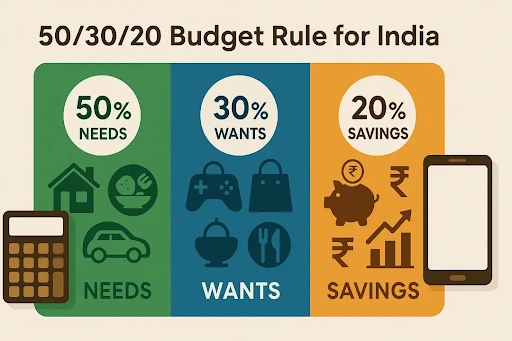
This rule can help guide you towards saving at a rate that won’t negatively impact your financial comfort or ability to pay your bills, while setting you up with a sustainable approach towards growing your wealth over time.
Get Tax-Efficient
Tax has the power to undo all your savings efforts. So, it’s prudent to invest in tax-efficient instruments like a Cash ISA.
You can save up to £20,000 in Cash ISAs, and the interest earned is entirely tax-free for that financial year. And do it fast, because the tax-free allowance for Cash ISAs is set to fall to £12,000 starting in April 2027.
Regardless, it will allow for higher savings and plenty of room for contributions for a better future. The financial plan stays consistent.
Future-Proofing Your Savings
The taller your future financial goals are, the harder planning and discipline will be required on your end in 2026.
But good financial habits certainly beget great monetary fruits down the line.
By prioritising emergency funds and building good habits through passive deposits, you can ensure that your wealth is well-managed no matter what the future holds.
Author - Veeramanchineni Lalitha

Masters of Business Administration from St Joseph's Institute of Management (Banglore)
Related Posts