Ans: Partnering with the right logistics provider ensures reduced compliance risk, accelerating cash flow, and reducing transportation overhead with the help from experience professionals.
Updated Mar 18, 2026
3 Proven Ways Heavy Hauling Boosts Profits
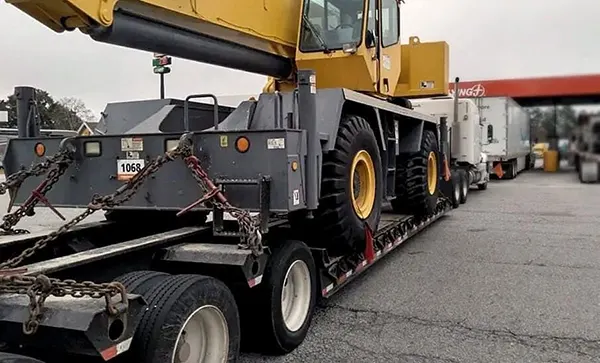
Capital-intensive sectors such as construction, renewables, oil and gas, and heavy-duty infrastructure frequently require heavy hauling as an operational necessity. But did you know that heavy hauling is much more than just lifting and moving heavy structures?
Heavy hauling boosts profits by reducing internal transportation overhead, accelerating cash flow, and, most importantly, reducing your firm’s risk exposure with the help of experienced professionals.
Let’s see how partnering with specialized logistics providers can help convert unpredictable liabilities in the logistics of a company into massive financial advantages.
Key Takeaways
- Hidden costs of moving heavy-duty industrial components
- Slashing internal transportation costs and lowering the risk exposure
- Accelerating cash flow through smarter delivery scheduling and networks
- Why partnering with a reliable logistics provider matters for a firm
The Hidden Cost of Moving the Big Stuff
Consider a mid-size construction firm that recently secured a major renewable energy contract spanning three states. The timeline is tight, margins are razor-thin, and the project cannot break ground until several industrial transformers and a pair of crawler cranes reach the site.
Suddenly, the operations team is scrambling to call carriers that lack the right trailer configurations. They discover that state permits take weeks to process and realize their internal logistics capability was never built for loads this complex.
By the time the equipment arrives, the project falls behind schedule, a key billing milestone slips, and cost overruns quietly eat into projected profits.
Asset-heavy industrial businesses that consistently protect their margins are not always the ones with the largest fleets, but they are the ones that partner with the right logistics providers. Here are three financial advantages that explain why.
1. Slash Internal Transportation Costs Without Sacrificing Control
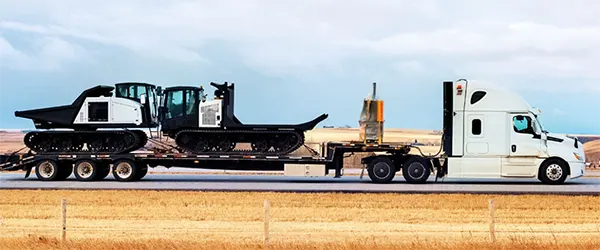
Building a capable in-house heavy haul operation is far more capital-intensive than most finance teams initially account for. Beyond the purchase or lease of vehicles, companies must invest in specialized trailer equipment, including removable gooseneck trailers, lowboys, step decks, and multi-axle configurations.
Each of these assets carries significant acquisition, maintenance, and depreciation costs. Add driver credentialing, safety compliance infrastructure, and the administrative overhead of managing a private fleet, and the fixed cost base compounds quickly.
For most project-driven businesses, this level of capital commitment does not make financial sense. Heavy haul requirements fluctuate heavily with the project pipeline. A company might need six specialized rigs for a single quarter and two for the next.
Owning that capacity to serve peak demand means carrying underutilized assets during slower cycles, which is a textbook drag on return on capital.
But outsourcing to a third-party heavy haul logistics provider converts these fixed costs into variable, project-based expenses. That shift is a core principle of lean financial management.
You simply pay for capacity when it is needed and redeploy capital when it is not. According to industry data, operating a private fleet can cost significantly more per mile than leveraging a third-party carrier network.
Drawing on established external networks, such as Titan Worldwide’s specialized heavy haul trucking operations, provides access to thousands of vetted drivers and a full range of trailer configurations.
This approach gives client companies the infrastructure depth of a major fleet operator without the balance sheet burden of owning one. Capital that would otherwise sit in depreciating rolling stock can be redirected toward core business investments, working capital, or project growth.
Key Insight: Outsourcing heavy hauling converts rigid infrastructure costs into variable, project-scoped expenses. This lean financial approach allows you to pay for capacity only when needed, freeing up capital for core investments.
2. Lower Your Risk Exposure With Experienced Compliance Experts
Oversized and overweight freight is among the most heavily regulated transportation categories in North America. Permits are issued at the state level and vary in requirements, processing times, routing restrictions, and enforcement standards.
A load that clears one state without issue can face rejection, fines, or forced delay at the next border if a permit condition is not precisely met. The Federal Highway Administration mandates that each state enforce vehicle size and weight laws to prevent violations and ensure vehicles do not exceed legal limits based on design specifications and safety considerations.
Companies that manage this in-house or through their usual freight broker often work without specialized expertise, leading to significant financial exposure. A single compliance violation can result in fines that overshadow the cost of the shipment itself.
The Federal Motor Carrier Safety Administration requires brokers engaging in interstate operations to maintain operating authority and at least $75,000 in financial security (bond or trust). Failure to do so, including due to unreplenished drawdowns from valid third-party claims, results in suspension of authority and potential civil penalties under 49 CFR part 386.
A rejected load at a weigh station can hold up an entire project phase, triggering penalty clauses in client contracts.
Experienced heavy haul logistics providers do not simply move freight. They absorb and manage regulatory risk across jurisdictions on behalf of their clients. This is a meaningful financial distinction.
Just as businesses that carry liability insurance to define and reduce their downside exposure, partnering with a bonded, fully insured specialized logistics provider functions as a form of operational risk transfer.
Specialized providers bring focused regulatory expertise across all contiguous states, Alaska, and Canada. In-house permitting specialists, route planning, pilot car coordination, and hazmat compliance capabilities ensure that regulatory complexity is handled before it becomes a financial problem.
The Federal Railroad Administration’s civil penalties, with ordinary maximums now at $36,400 per violation after inflation adjustments, highlight severe financial risks of railroad safety non-compliance.
Comprehensive insurance coverage offers a scale of security that most internal logistics teams cannot cost-effectively replicate.
Important: A single compliance violation or rejected load can trigger massive fines and project delays. Never underestimate the financial exposure of managing oversized freight without specialized regulatory and permitting expertise.
3. Accelerate Cash Flow Through Smarter Delivery Scheduling

In project-driven industries, equipment delivery timing is not just a logistics metric. It is a financial trigger.
When a crawler crane arrives three days late to a construction site, the crew stands down, subcontractors bill for idle time, and the project manager must push the milestone completion date.
That delay ripples outward, causing the billing cycle to slip, moving invoices into the next month, and deteriorating the company’s cash position.
This dynamic is especially pronounced in industries like renewable energy installation, where the delivery of wind turbine components determines when site work begins.
In oil and gas pipeline construction, the arrival of heavy equipment governs the entire project schedule. A predictable logistics partner operates as a highly effective cash flow management tool. They ensure that the project sponsor’s payment terms are activated on time.
Top-tier logistics providers routinely execute complex loads with exceptional on-time delivery rates. For a finance or operations team building a project schedule, these performance figures serve as reliable forecasting inputs.
When the delivery performance guarantees high reliability, project timelines also become defensible, billing milestones become predictable, and finance teams can model receivables with greater confidence.
That confidence reduces the need for short-term credit facilities or contingency reserves traditionally held to buffer against logistics delays.
Operational frameworks reinforce this financial stability directly. Proactive contingency planning for weather events, regulatory changes, and equipment challenges ensures that clients are informed of potential issues long before a deadline has passed.
This proactive communication posture separates true logistics partners from transactional freight vendors. It provides a material operational advantage for businesses managing complex project economics.
Pro Tip: Treat your logistics partner as a cash flow management tool. Consistent, on-time delivery rates allow finance teams to accurately forecast billing milestones and reduce the need for short-term credit buffers.
The Logistics Partner Built for Complex Loads

These three financial advantages listed above do not emerge when you are working with any logistics provider. They are the direct output of working with a partner specifically structured for the freight that generalist providers avoid.
For industries with demanding transport requirements, specialized logistics firms function as dedicated operational partners rather than transactional intermediaries. This is especially true for sectors like oil and gas, construction, renewables, mining, and industrial manufacturing.
This operational foundation relies on robust scale and access to expansive driver networks. It requires specialized trailers like flatbeds, step decks, RGNs, lowboys, and multi-axle configurations, alongside full cross-border coverage.
Specialized expertise must span the full range of complex freight, encompassing cranes, excavators, wind turbines, solar panels, industrial transformers, and turnkey project cargo.
Beyond physical equipment and geographic reach, effective heavy haul management requires dedicated personnel. Operating with low representative-to-client ratios ensures direct access to decision-makers and bypasses inefficient call centers.
When route planning, permitting, compliance management, and turnkey project logistics are managed in-house by one accountable partner, specialized logistics transforms from an operational afterthought into a strategic financial asset.
The Bottom Line
Cost reduction, risk mitigation, and cash flow acceleration are not independent outcomes. They are interconnected levers activated simultaneously by a capable logistics partner.
When a firm eliminates the transportation overhead and transfers compliance liability to a qualified provider, it secures predictable delivery schedules, and the financial effect is cumulative. This compounding benefit protects project margins across the entire lifecycle.
For operations and finance leaders in asset-heavy industries, the practical question is not whether specialized logistics holds financial value. It is whether the current logistics approach is successfully capturing that value or leaving it on the table.
If upcoming projects involve moving heavy or oversized equipment across state lines or international borders, the optimal time to evaluate logistics strategies is long before the project initiates.
Moving oversized loads with confidence requires careful planning and the right operational support. Evaluating specialized logistics capabilities ensures that complex transportation requirements consistently strengthen, rather than compromise, the overall profitability.
Partnering with the right logistics providers prevents costly delays and sets the foundation for operational success.
Author - Veeramanchineni Lalitha

Masters of Business Administration from St Joseph's Institute of Management (Banglore)
Table of Contents
Related Posts