Factors that influence financial decisions involve risks, cash flow, cost, and marketing.
Updated Mar 6, 2026
How Time Changes the Impact of Financial Decisions

Financial decisions rarely feel important while they are happening, but over time, their impacts could be huge. Are you wondering how time changes the impact of financial decisions?
According to NEFE, Hispanic adults (53%) cite not having prior knowledge to make a financial decision as a reason for a lack of confidence.
Therefore, this article aims to study how, over time, changes in the financial decisions are impacted as well, the reasons behind this change, and actions that can be taken, and more!
Key Takeaways
- Studying the small differences that create great outcomes
- Problems with short-term comfort
- Importance of timing
- Viewing the repeated habits
- Observing the missed opportunities
- Flexible shrinking as commitments age
- Decisions that gain clarity
- Early momentum, which influences future actions
- Temporary decision that become permanent fixture
- Patience that alert scale of outcomes
- Long horizons that reward the steady behaviour
Small Differences, Big Outcomes
Tiny percentage differences are easy to go unnoticed when options seem identical, and the attention is expected to divert towards the surface-level problems. Many decisions are made with the assumption that small details will stay small.
When comparing financial options, it’s easy to focus on the stated rate and assume the rest works itself out.
But the way this rate is applied over time often matters far more than it appears at first glance.
For instance, you begin to notice how the interest rate vs APY affects real results. What once looked like a technical distinction slowly alters balances, costs, or growth in ways that feel disproportionate to the original choice.
Short-Term Comfort
Smaller payments, delayed action, or familiar routines reduce pressure when things feel tight or uncertain. At the moment, those decisions often feel like the safest option available.
But later, it leads to tradeoffs. What helped you feel stable early on also reduced your progress or limited your flexibility.
Eventually, what comes to notice is how time amplified the cost of prioritizing relief over momentum.
Timing Over Amount
The size of a financial decision often draws attention, but it is timing that quietly carries more weight.
A modest cost handled early can stay manageable, while the same cost delayed can grow simply because time adds pressure. Waiting does not feel expensive at first because nothing changes immediately.
You experience this when the delay increases the total impact through accumulated costs or missed growth. The original amount stays the same, but time adds unplanned layers.
Looking back, you may realize that acting sooner would have mattered more than finding a slightly better option later.
Repeated Habits
Single decisions rarely define outcomes on their own. Patterns do. Small habits repeated regularly shape results far more than one-time actions.
You see this when routine behavior starts stacking. A choice repeated weekly or monthly begins to influence where you stand years later. Time turns consistency into scale. The result comes from repetition sustained quietly in the background.
Missed Opportunities
Missed opportunities do not make much difference to people when they pass.
Life continues, and nothing breaks. Because there is no visible consequence, the decision feels neutral.
Years later, you recognize how time gave that missed opportunity weight. The window that once felt open no longer exists in the same way.
Recreating it now requires more effort, more cost, or more compromise. The impact was never sudden, but time made it real.
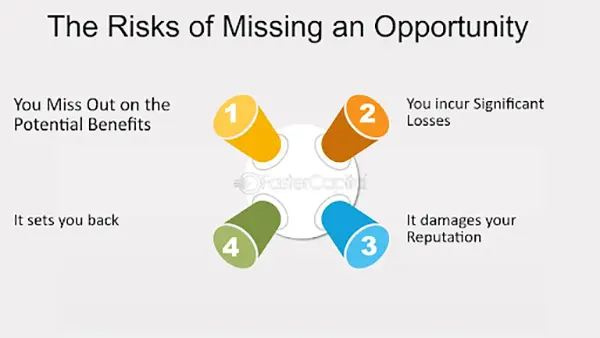
The risk of missed opportunities can be seen in the infographic :
Decisions Gaining Clarity Only in Hindsight
Many financial decisions feel uncertain at the moment they’re made. Information feels incomplete, outcomes are unclear, and the best option is rarely obvious.
Choices often rely on judgment rather than certainty, which can make them feel uncomfortable or rushed. Time plays a key role in revealing what those decisions actually meant.
You often gain clarity only after enough time has passed to show consequences. What once felt confusing starts to make sense once outcomes are visible.
Flexibility Shrinking as Commitments Age
Early financial decisions often leave room for adjustment. Options feel open, and reversing course seems possible.
Commitments made during early stages rarely feel any difficulty because time has not yet added layers of obligation.
As time passes, you notice how flexibility narrows. Commitments settle into place, and changing direction requires more effort than before.
What once felt adjustable now carries consequences.
Early Momentum Influencing Future Options
Starting early gives a bonus motion. Even small steps taken early begin shaping future opportunities.
Momentum does not need to be dramatic to matter. It simply needs to be consistent.
You see this when early progress opens doors later. Options feel easier to reach once movement is already happening, like in stock markets.
Time rewards early momentum by expanding what becomes possible, while delayed starts often require extra effort to regain a similar footing.
Temporary Decisions Becoming Permanent Fixtures
Some choices are made with the belief they will be short-lived. Temporary solutions feel convenient because they promise flexibility later.
These decisions rarely feel risky because they are framed as placeholders.
Over time, you may notice how easily temporary choices settle in. What was meant to be brief becomes familiar, then permanent.
Time turns convenience into habit, and habit into structure. Undoing those choices later often requires more intention than expected.
Fun Fact A penny costs more to make than it’s worth.
Patience Altering the Scale of Outcomes
Patience isyet another hidden gem. Waiting can feel like inactivity, especially when progress appears slow.
Yet patience changes how outcomes develop by allowing time to work steadily rather than forcefully bearing down on fruitful results.
You experience this when allowing decisions to mature, which produces results larger than expected.
Time rewards patience by expanding impact gradually. Outcomes shaped by patience often feel steadier and more durable than those driven by urgency.
Long Horizons Rewarding Steady Behavior
Long horizons change how effort gets rewarded. Quick wins often fade, while steady behavior compounds quietly.
Time supports consistency over intensity, which means that consistent small actions build desired results.
You notice this when consistent behavior produces results that sudden effort never could. Progress feels less dramatic, yet more reliable.
Time turns steady behavior into something substantial, even when each step feels ordinary.
Conclusion
Time plays an important role in reshaping financial decisions. It brings forward changes in flexibility, group actions turn into habits, and turns small decisions into those that define the financial status.
A wider understanding and analysis of financial decisions while considering the time and other constraints can help in their success.
Author - Dushyant K

Finance Writer
Table of Contents
- Small Differences, Big Outcomes
- Short-Term Comfort
- Timing Over Amount
- Repeated Habits
- Missed Opportunities
- Decisions Gaining Clarity Only in Hindsight
- Flexibility Shrinking as Commitments Age
- Early Momentum Influencing Future Options
- Temporary Decisions Becoming Permanent Fixtures
- Patience Altering the Scale of Outcomes
- Long Horizons Rewarding Steady Behavior
- Conclusion
Related Posts