In order to protect against cost overruns, you must establish a contingency firm, establish processes to manage change orders, and establish the buyout phase strategically.
Updated Mar 9, 2026
Reducing Construction Cost Overruns with Skilled Teams and Better Systems

Cost overruns are rarely because of a single cause. In most of the cases, it is the small failuresthat log up and cause big cost overruns.
A study found that only 31% of all construction projects were within 10% of their budget. Just 25% of the projects came within 10% of their original deadlines over the same time period of three years.
Such an impact pushes managers to the margins, who then have to work towards strengthening workflow.
But all this can be avoided with skilled teams and enhanced systems, making the financial outcomes predictable.
Key Takeaways
- Learning the reasons for overruning construction costs
- Knowing how the efforts of skilled teams protect your margin
- Building better systems to make cost control automatic
- Habits to develop in order to reduce overruns
- Controlling the elements you can control
Why construction cost overruns keep happening
So what is a cost overrun? What does it mean?
Well, it’s when the actual spending made exceeds the approved budget that was in place.
Even the most modest of overruns will erase already thin construction margins.
Overruns will typically stem from :
- productivity losses
- scope gaps
- procurement volatility
- and weak tracking systems.
With construction cost overruns, it has a knock-on effect when it comes to the health of the project and the company’s cash flow, bonding limits, and the trust stakeholders have in you.
It also impacts the competitiveness in future bids, too, so it’s important to try and reduce those cost overruns as best as possible.
How skilled teams directly protect your margins
Having a skilled team in place directly protects your margins. This can help in the following way :
- By influencing rework rates
- safety incidents
- productivity
- The capability of your workforce matters.
When your employees are performing well in the field, that helps stabilize costs and keeps them controlled for those heading up the office HQ.
That’s why it’s important to invest in training and to have accountability.
Invest in workforce development before problems show up
The benefit of structured and continuous training helps to improve productivity, reduce errors made, and ultimately strengthen safety compliance, too.
Aligning the training initiatives with project pain points that often reoccur, are both productive and helpful. Consider pain points like coordination gaps and equipment misuse.
For example, when it comes to training, it’s important to incorporate structured onboarding and ensure safety certifications are attained.
Technical upskilling programs are also great for helping improve individual skillsets. Tracking the ROI of these efforts will help productivity metrics and reduce incident rates as a result.
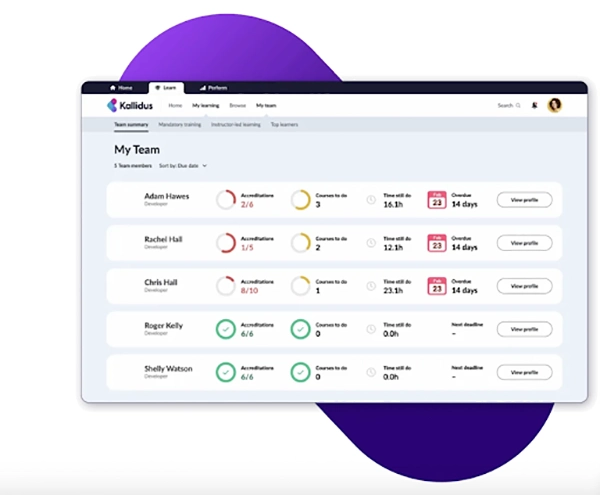
Learning management systems are a great form of software to centralize training, track certifications, and ensure compliance records are maintained at scale.
You can learn LMS from Kallidus to understand how digital learning platforms are useful in this regard to streamline workforce development in construction and reduce administrative overheads.
Strengthen accountability and team collaboration
Unclear roles within the workforce and informal decision-making often lead to increased delays, drifting from the budget, and duplication that happens.
That’s why it’s important to make sure people are given defined responsibilities so that accountability is taken when required.
With clearly defined responsibilities, reporting lines, and escalation paths, it all helps to reduce costly confusion.
Through the use of structured collaboration, you’re able to shorten problem-resolution cycles and minimize the disruption of your schedule, too.
By having structured coordination meetings that make use of cost-impact reviews, are more effective for team collaboration, rather than just offering schedule updates.
This further improves team collaboration.
The use of transparent reporting helps to reduce defensive behavior and also encourages earlier issue escalation.
Manage subcontractors and execution teams proactively
Subcontractor underperformance is what often drives a lot of labor overruns and slippage during the schedule.
The use of rigorous prequalifications, measurable performance standards, and detailed scopes of work all help to reduce the financial risk as a company handling a construction project.
There are a number of ways to manage subcontractors and make their work more effective.
For example, Subcontractor scorecards are tools that are used by the project manager to help objectively evaluate the performance of subcontractors.
It’s useful to track productivity, safety compliance, manpower levels, and schedule adherence.
A rating system helps to quantify performance. Offering milestone-based payment structures helps align incentives with performance.
Build better systems that make cost control automatic
Skilled teams on construction projects still struggle without access to accurate and timely data that helps guide decisions as a result. That’s why the use of standardized systems and digital tools is important to make the work easier.
Use construction management software for real-time visibility
Centralized platforms are helpful to improve things like cost tracking, changing order management, and scheduling coordination.
The integration of field data, such as materials used and labor hours, along with financial reporting, helps to improve forecast accuracy for more reliable numbers.
Tip: Fieldwire has educational content that lets construction managers learn more about construction management software. You can examine how these platforms aid cost tracking, centralize documentation, and improve communication to reduce manual efforts as well as oversight gaps.
Standardize processes to reduce errors and inefficiency
Inconsistent workflows are never ideal when it comes to construction projects. It leads to design misinterpretation, coordination breakdowns, and procurement errors.
That’s why it’s important to make use of standardized checklists and to have document control procedures in place. Approval workflows all help to reduce variability between projects, too.
Structured procurement workflows specifically are helpful to reduce rush orders and premium pricing, whilst standardized preconstruction checklists help surface scope gaps before mobilization.
Monitor risk before it becomes costly
Risk is something to mitigate, too, and early-warning indicators help prevent smaller issues from escalating into major overruns.
Having disciplined contingency management helps to protect your margins without having to encourage more unnecessary spending.
Assigning clear risk ownership is helpful to follow through on mitigation plans, and it’s useful to track earned value metrics, labor productivity ratios, and supplier lead times to ensure problems are addressed promptly before the costs rise too high.
Tackle the most common cost overrun drivers head-on
Certain risk areas will repeatedly drive overruns across your construction project. That’s why proactive control in scope management, as well as labor efficiency, all help with measurable cost stability.
Control scope creep and change orders
When unmanaged changes happen, it often results in inflated budgets and disrupted sequencing, hindering the balance.
Therefore, formal change management procedures will ensure cost implications are reviewed and approved before any work proceeds.
Look at aligning the expectations with clients during preconstruction so that it reduces any late-stage revisions that cost more money and delay the project as a whole.
Having clearly documented assumptions during estimating helps minimize ambiguity as a result.
Manage labor and material costs strategically
Labor inefficiencies and material price volatility are elements of construction that quickly compound across long-duration projects.
A good way to do this is through weekly productivity tracking and putting strategic supplier agreements in place to help reduce the financial exposure faced otherwise.
Having forward-buy agreements and negotiated supplier contracts helps to stabilize material costs. Improving site logistics planning also helps with reducing material waste.
Improve scheduling and resource allocation accuracy
Unrealistic timelines create trade stacking, overtime, and more importantly, productivity loss. That’s why it’s useful to have detailed sequencing and resource leveling to protect both schedule and cost performance.
Digital scheduling tools help improve forecasting reliability. Aligning manpower forecasts with milestone requirements is useful for preventing shortages from occurring. These integrated scheduling tools enhance coordination between trades, too.
Practical habits that consistently reduce overruns
Sustained cost control relies on daily discipline and not just one-time fixes. Consistent planning and transparent reporting are two examples of how your projects create compounding financial benefits.
Construction managers benefit from embedding these habits into routine project governance.
Plan thoroughly and control budgets actively
Detailed preconstruction planning helps to reduce uncertainty during execution. The use of historical data helps with improving estimating accuracy and helps inform realistic contingencies, too.
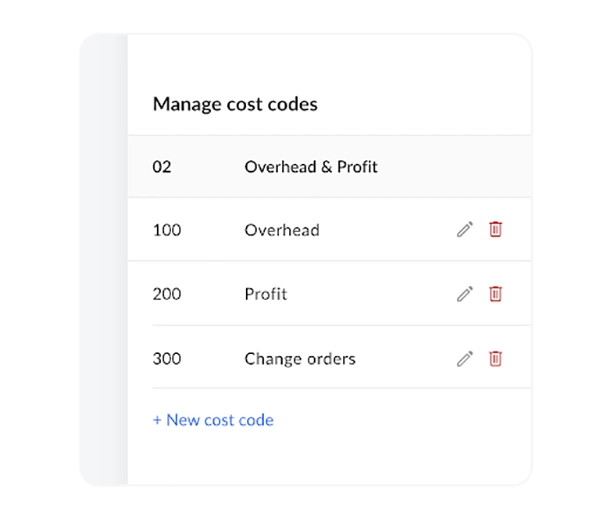
Make use of field cost codes and align them with structured cost breakdowns for effective planning. Rolling forecasts help in allowing proactive adjustments to labor or procurement strategies, too.
Strengthen communication systems across teams
Miscommunication is what often leads to errors that only surface weeks later and result in rework and delays.
That’s why it’s important to have teams on centralized communication tools to help reduce that fragmentation and documentation loss that often happens.
Shared dashboards help to improve visibility for both field supervisors on the ground and the managers handling the finances. Daily field reports are helpful to align with cost tracking systems, too.
The use of structured communication and shared platforms helps greatly in reducing dispute frequency.
Prioritize quality and productivity together
If there’s poor quality control during a project, this can lead directly to rework and ultimately inflate both labor and materials costs, too.
It’s therefore worthwhile to set measurable productivity benchmarks to help clarify expectations for your crews.
Look at implementing inspection checkpoints before any major phase transitions and consider tracking installed units per labor hour, so you can identify any underperformance early on.
Control the controllables—and your margins follow
Internal execution of discipline needs to be strengthened, especially with market volatility present, as well as the client-driven changes that come with any construction project.
With skilled teams and well-designed systems in place, you’ll have a more competent workforce that can execute their roles successfully, reinforced with strong systems that detect deviations early.
For construction managers, it’s imperative to invest in your workforce development. Look at how you standardize operations and leverage digital tools, too.
Conclusion
Cost Overruns turn out to be negative for the construction projects, leading to losses in production, weak tracking systems, gaps in the scopes, etc.
This can be dealt with by having skilled teams that protect your margins and ensure stabilization of the costs. It further improves accuracy and sets benchmarks leading to success.
Author - Dushyant K

Finance Writer
Table of Contents
- Why construction cost overruns keep happening
- How skilled teams directly protect your margins
- Build better systems that make cost control automatic
- Tackle the most common cost overrun drivers head-on
- Practical habits that consistently reduce overruns
- Control the controllables—and your margins follow
- Conclusion
Related Posts