3 Ways Water Features Boost Business Curb Appeal
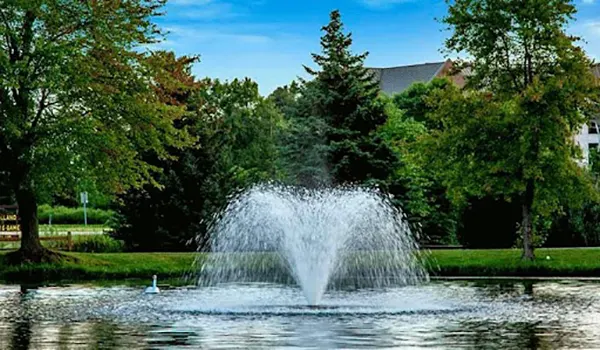
Water features boost business curb appeal in three primary ways by establishing striking aesthetic focal points, delivering measurable environmental sustainability benefits, and increasing customer engagement.
Well-designed business landscapes actively influence commercial property values, tenant retention, and consumer traffic. Research conducted by The University of Texas at Arlington reveals that a property’s exterior aesthetic can contribute as much as 7% to its final sale price.
By incorporating water features like fountains or ponds, commercial spaces evolve into memorable landmarks that project an enduring image of corporate excellence.
Key Takeaways
- Establishing visual anchors to create memorable landmarks that project corporate excellence and increase property value.
- Leveraging acoustic masking to drown out urban noise, transforming transitional pathways into calming, intentional destinations.
- Implementing continuous bottom-diffused aeration to maintain biological balance, preventing costly maintenance liabilities and foul odors.
- Mitigating the urban heat island effect through water features that cool ambient temperatures and support local biodiversity.
- Utilizing biophilic design to lower visitor stress levels, which naturally increases dwell time and encourages higher consumer spending.
- Scaling organic brand reach by creating “social-media-worthy” focal points that act as free, user-generated marketing for the property.
1. The Aesthetic Edge of Visual Water Anchors
Every memorable commercial property possesses a visual anchor that gives the eye a place to land and the mind a reason to pause. In high-performing landscapes, water achieves this more effectively than standard hardscaping or static plantings.
A reflective pond near a primary entrance or a centralized courtyard fountain introduces immediate depth and dimension. This contrast between a flat, generic landscaped lot and one anchored by moving water is immediate and striking.
Reinforcing Brand Identity Through Landscape Design
A large property’s landscape constantly communicates to clients and visitors. Pristine, thoughtfully maintained aesthetic water features signal permanence, stability, and meticulous attention to detail.
For huge property developments, a thriving water element raises the perceived prestige of the entire neighborhood. Maintaining this pristine appearance requires continuous circulation and oxygenation using durable equipment such as Everblue Pond’s pond aerator systems to maintain biological balance.
The Sound of Water Masks Ambient Noise
Moving water provides an acoustic benefit that conventional landscaping cannot replicate. The gentle sound of flowing water naturally masks ambient noise, such as nearby traffic or HVAC systems.
It replaces harsh sounds with an auditory backdrop that human nervous systems find inherently calming. This acoustic masking turns entryways and outdoor seating areas into intentional destinations rather than transitional pathways.
Pro Tip: Strategic placement of a fountain near high-traffic entryways doesn’t just look good – it provides acoustic masking. The soothing sound of moving water naturally drowns out harsh street noise, instantly relaxing visitors.
2. Environmental Payoffs That Benefit Your Bottom Line
A properly aerated pond operates as a healthy, balanced ecosystem, distinctly different from stagnant water. Continuous aeration circulates oxygen throughout the entire water column.
This biological support sustains beneficial bacteria, maintains water clarity, and starves out the low-oxygen conditions that allow algae and muck to accumulate. Bottom-diffused aeration resolves this by drawing water from the lowest depths and creating continuous oxygen exchange.
Reducing Heat Islands and Supporting Local Biodiversity
Commercial properties dominated by sprawling parking lots and concrete plazas measure significantly warmer than the surrounding environments. The EPA identifies water features and their surrounding plantings as highly effective tools for mitigating the urban heat island effect.
Beyond cooling ambient temperatures, healthy ponds and water gardens support local biodiversity by attracting pollinators and native birds. This ecological alignment resonates heavily with the priorities of modern tenants and consumers.
Smarter Water Management for Sustainable Properties
Closed-loop pond systems often function as sustainable irrigation reservoirs for commercial properties. They drastically reduce a property’s dependence on municipal water supplies to maintain surrounding green spaces.
Properly engineered stormwater features, including retention ponds, capture and filter runoff volume while improving site-level water quality. In this context, a commercial pond operates as a highly functional component of a property’s environmental infrastructure.
Warning/Important: Without continuous bottom-diffused aeration, standing water quickly deteriorates into a costly maintenance liability. Proper oxygenation prevents foul odors and toxic algae blooms, protecting both your investment and local biodiversity.
3. Turning Visitors into Loyal Customers Through Engagement
Biophilic architecture merges the natural world with modern construction through the use of flora, water, and ambient light. Utilizing these elements doesn’t just improve aesthetics; it boosts occupant well-being by 15%.
When customers and tenants feel relaxed in an environment, they dwell longer and form positive psychological associations with the space.
Social-Media-Worthy Moments That Market Themselves
A visually striking water feature provides inherent photographic appeal for commercial spaces. Visitors, guests, and passersby organically capture and share these landmarks on social media platforms.
This user-generated content acts as earned media, extending the property’s brand reach to new networks without additional marketing expenditures. For retail and hospitality venues, this organic visibility efficiently builds top-of-mind awareness.
Creating Functional Outdoor Spaces People Want
A pond or fountain anchors an outdoor space, giving a courtyard or campus a distinct sense of purpose. Property managers can design functional micro-destinations around these features by adding integrated benches, structured walking paths, and shaded seating.
These enhancements increase the usable footprint of a property without requiring heavy construction. Ultimately, this improves the overall quality of life and engagement for site users.
Key Insight: Integrating natural water elements is rooted in biophilic design. When commercial spaces lower visitor cortisol levels through nature, dwell time naturally increases, translating directly into higher consumer spending
Maintenance Made Simple for Peak Condition
The primary hesitation surrounding commercial water features typically involves long-term maintenance rather than initial installation costs. A landscape asset requiring constant intervention or unpredictable repair cycles is rarely sustainable.
The practical solution relies on deploying commercial-grade aeration from the beginning. A properly sized aerator continuously processes organic matter and significantly reduces algae growth, executing the heavy biological lifting automatically.
Modern commercial systems are engineered for year-round operation with minimal hands-on intervention. This allows property management teams to maintain pristine water quality while focusing their resources on other operational priorities. Consistent upkeep ensures the aesthetic value never diminishes over the lifespan of the installation.
The Bottom Line
The condition of a commercial landscape sets expectations long before a visitor enters a building. A well-maintained water feature communicates operational stability, attention to detail, and a commitment to creating high-quality visitor experiences.
The benefits discussed function as a unified strategy for consistent property value enhancement. Establishing these features requires strategic planning, but the historical barriers to maintenance are easily overcome with modern equipment.
By implementing correct circulation systems and thoughtful landscape design, commercial properties can transform standard outdoor areas into high-performing assets. These vibrant focal points actively contribute to the organization’s broader success and community standing.

(Accounting Expert & Content Writer)