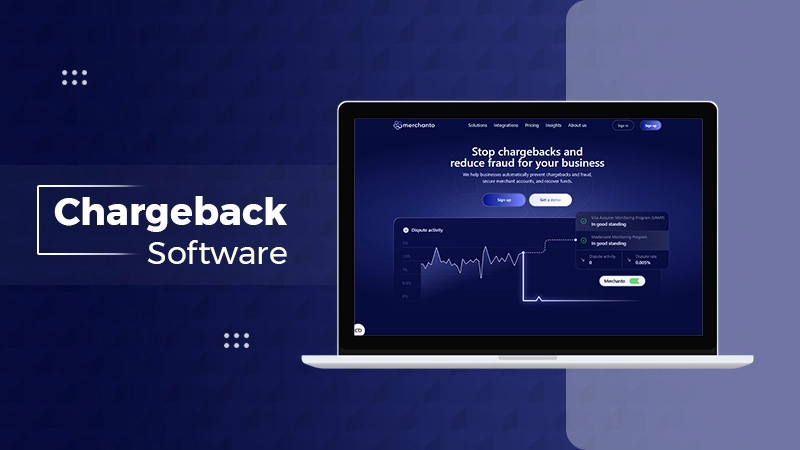
A payment processing company acts as an intermediary between buyers, sellers and other financial institutions to facilitate digital transactions.
Updated Apr 1, 2026
7 Best Companies That Let You Launch Your Own Payment Processing Brand

It is the age of quick and easy digital payments, and the demand for branded payment infrastructure has never been stronger.
Whether you’re a fintech startup organisation, an established bank or a marketplace looking to monetise payment processes, partnering with the right white label payment processor can be the difference between spending years on development and going live in just a few weeks.
This post lists seven standout companies that make it possible for your brand to operate payment services without having to build it all from scratch.
Key Takeaways
- A payment processing brand needs a comprehensive payment platform solution to provide more control and be successful in its ventures
- White-label payment platforms contain the required software and infrastructure needed to facilitate payments across different channels
- A dedicated payments processor provides analytical data, fixes immediate issues and allows companies to scale with ease
- The choice of a payment processing software depends on their needs at the moment and how they want to grow with the assistance of a reliable solution
1. Akurateco
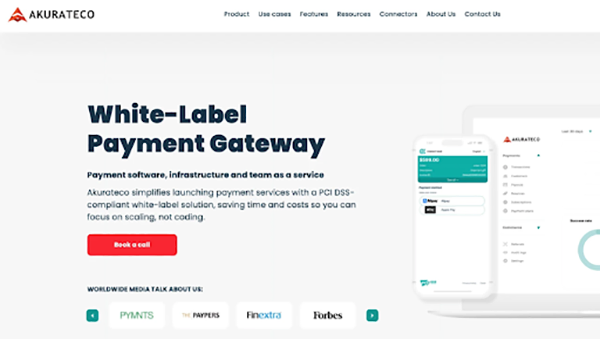
Akurateco is one of the most comprehensive white-label payment platforms available today, purpose-built for PSPs, banks, acquirers, and online businesses that want full control over their payment brand.
If you’ve ever wondered how to create a payment processing company, Akurateco’s model essentially answers that question end-to-end: it packages the software, infrastructure, and a dedicated payment team into a single subscription-based service, eliminating the capital expenditure typically associated with launching a payment business.
The platform comes with over 600 ready-to-use payment connectors, intelligent routing and cascading, smart billing, built-in anti-fraud tools, recurring payments via tokenisation, and comprehensive analytics. PCI DSS compliance is included from day one.
What sets Akurateco apart is its “Payment Team as a Service” model — dedicated account managers with 15+ years of hands-on industry experience handle routing configuration, compliance, merchant onboarding, and ongoing optimisation so that clients can focus on growing their business rather than managing infrastructure.
The platform supports the deployment of services both as a SaaS solution and a cloud infrastructure. This gives clients unmatched flexibility and multiple options to choose from.
According to company data, clients have noticed approval ratios jump from around 50% to 70% after migrating to the platform, and time to market is typically two weeks.
2. Rapyd
Rapyd is a UK-headquartered fintech platform founded in 2019 that positions itself as a full-stack fintech-as-a-service provider. The company supports over 900 payment methods across more than 190 countries, making it a natural fit for businesses with genuinely global ambitions.
Its product features payment collection, payouts directly via eWallets, bank transfers and cards. It is a configurable financial hub and a white-label gateway provider accessible through its API or hosted checkout pages.
Rapyd holds direct acquiring licenses in the UK, EU, and Singapore, which allows it to offer in-store and online processing through a single integration — a relatively uncommon capability in the market.
The platform includes AI-powered fraud monitoring through Rapyd Protect, embedded KYC/KYB workflows, 3D Secure, and daily, weekly, or monthly settlement options. By early 2025, the company had raised over $1.275 billion in total funding and, according to its CEO, reached profitability in 2024.
For businesses that need breadth of payment method coverage across multiple continents, Rapyd is a strong contender.

3. Spell
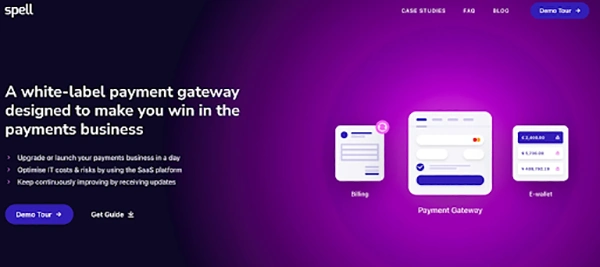
Spell is a SaaS white-label payment platform designed specifically for PSPs that want to move fast. The company claims businesses can be up and running in as little as one day, and typically within one week, making it one of the fastest launch paths in the space.
The platform combines a white-label payment gateway, e-wallet functionality, billing, and payment orchestration under a single RESTful API, with both front-office and back-office systems included.
Spell was born out of direct operational experience running a payments business, and that translates rightly through its design. The platform includes automated task generation for account managers, customizable merchant dashboards with real-time balance tracking, and tools for managing account-to-account payments alongside traditional online payments.
The focus is set mainly on payment service providers that want to compete with already established players without the need of building their own infrastructure or proprietary technology. Spell’s roadmap is oriented toward helping those businesses scale aggressively rather than simply launching.
4. Paydock
Paydock is a Sydney-based payments technology company that takes a connector-first approach to white-label payment infrastructure. Rather than locking clients into a single processing stack.
It allows businesses to integrate and manage multiple payment gateways through a unified platform, giving merchants the flexibility to work with their preferred payment providers while benefiting from centralised reporting, routing, and reconciliation.
The platform supports subscription billing, one-time payment workflows, and event-based notification systems, and it is PCI DSS Level 1 compliant. Paydock serves clients across retail, digital services, marketplaces, and subscription businesses, with particular regional strength in the Asia-Pacific market.
Its multichannel capability makes it relevant for businesses that need to manage both online and in-person payment flows within the same environment.
Enterprises that have an existing relationship with specific acquirers or gateways but want an orchestration layer on top often find Paydock’s model a natural fit.
5. CellPoint Digital
CellPoint Digital brings a distinctive heritage to the payment orchestration space: the company was founded in 2007 and grew out of the travel and aviation industry, which remains its primary vertical alongside broader e-commerce.
Their origin has shaped a platform built specifically to handle the most complex payment situations in commerce. Split payments across entities, multi-currency payment flows, intricate commission structures, and sophisticated regulatory requirements across different jurisdictions.
Interesting Fact
Many SaaS companies use white-label gateways to charge their own sub-merchants fees, turning their payment function into a profit centre.
The platform focuses on payment performance optimisation, with intelligent routing designed to maximise approval rates and minimise failed transactions.
In 2025, CellPoint Digital entered a notable partnership with Sabre Corporation, giving airlines using the SabreSonic and Radixx systems access to its full range of payment methods and orchestration capabilities.
For enterprise clients in travel, hospitality, or any sector requiring sophisticated multi-party payment management. CellPoint Digital’s depth of capability is hard to match, though it comes with a corresponding implementation investment.
6. BridgerPay
BridgerPay is an Israeli-founded payment orchestration platform, established in 2019 and headquartered in Limassol, Cyprus, that has built its reputation around maximising conversion rates through comprehensive connectivity and continuous optimisation.
The platform aggregates multiple payment providers under a unified interface, allowing businesses to work with their preferred PSPs while managing everything through a single dashboard — reducing both operational complexity and the risk that comes with dependence on a single provider.
BridgerPay is PCI DSS Level 1 compliant and includes a smart routing engine that learns from transaction outcomes and adapts routing strategies over time to improve performance.
It also gives businesses centralised visibility across their entire payment stack, providing tools to identify underperforming routes and adjust configurations without needing manual intervention.
For companies that view their payment conversion rate as a primary revenue lever and want a data-driven platform built around continuously improving that metric, BridgerPay is worth serious evaluation.
7. Spreedly
Spreedly is one of the longer-standing players in the payments orchestration space, having been founded in 2008 and headquartered in Durham, North Carolina.
The company’s core value proposition is an open payments platform that connects businesses to payment services in over 100 countries through a single API integration, eliminating the need to build and maintain individual connections to multiple gateways.
A core feature of the platform is its payment vault, which can store tokenised card data in a PCI-compliant environment, allowing the data to be used across various payment processors without re-capture.
Spreedly serves merchants, platforms, and fintech companies, and its longevity in the market means it has deep integrations with a broad range of gateway partners.
The platform is particularly suited to businesses that already have established payment provider relationships and want a flexible orchestration layer that routes transactions intelligently across them without being locked into a single processor’s ecosystem.
For developers and technical teams looking for a well-documented, API-first approach to multi-gateway payment management, Spreedly’s decade-plus track record provides a level of stability that newer entrants cannot yet match.
Final Thoughts
Every platform on this list solves a practical issue that organisations face. The right choice depends heavily on where you are in your journey and what the goal of the business is.
Spreedly and Paydock are strong picks for businesses that already have processor relationships and need an orchestration layer to tie them together intelligently.
Rapyd is the clearest option for companies prioritising global payment method coverage out of the box. CellPoint Digital is the specialist choice for travel and aviation, where multi-entity payment complexity is the norm rather than the exception.
BridgerPay and Spell are well-suited to newer PSPs and growing platforms looking for a modern, conversion-focused foundation with a relatively fast implementation path.
Akurateco stands in a category of its own for companies that want to launch or scale a full payment processing business under their own brand. It is not just a software vendor — it is a platform, infrastructure provider, and payment operations team rolled into one.
For PSPs, banks, and acquirers that need more than a technical layer and want a genuine operational partner with deep industry expertise, it is the most complete solution on the list.
The combination of fast time to market, extensive connector coverage, built-in compliance, and a dedicated team makes it the most practical choice for anyone serious about building a sustainable payment business rather than simply integrating a gateway.
Author - Shourya Kumar

Finance Writer
Related Posts