
It is the federal benchmark for public playground safety, including height and surfacing rules.
Updated Mar 28, 2026
3 Expert Tips for Safe Business Play Spaces
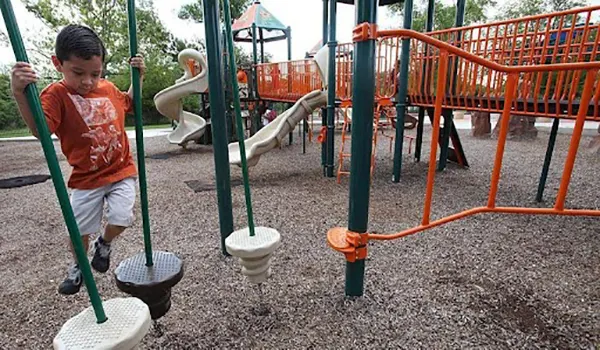
The definition of a successful business environment is not limited to desks and accounting anymore. As the demand for community hubs increases, so does their associated responsibility for risk mitigation and safety compliance.
Converting a vacant corner into a busy playground is more than just aesthetically pleasing; rather, following federal construction safety standards and having accomplished engineer certification on your project as part of the business model will provide not just an amenity for parents but also create a lasting legacy built through trust and dependability.
This article outlines 3 key design and installation “hacks” to achieve your community playground while avoiding unforeseen liabilities to your business.
Key Takeaways
- Comply with all CPSC & ASTM F1487 standards to avoid liability.
- Use age-appropriate zones to reduce fall hazards, which account for 80% of all injuries.
- Hire trained installers to validate warranties and ensure structural integrity with ongoing heavy usage.
From Neglected Corner to Community Hub
The idea of creating a vibrant community starts with the change from thinking of an empty lot as an “overflow” for vehicle parking to thinking of the space as a strategic resource for promoting family-centered learning.
Take, for example, a small organisation that has a fenced-off grassy area that is empty. Studies show playground equipment continues to be the greatest source 200,000-plus playground-related injuries reported each year, a large number of which occur due to non-compliance with established regulations.
When professional installers make investments in creating professionally installed environments, the empty lot becomes a major focal point for neighbours to come together.
Parents linger after events, children explore climbing structures, and neighbors introduce themselves. Upgrading an outdoor area builds a genuine community space that gives the neighborhood a centralized reason to gather.
Whether you manage a school campus, a community park, or a daycare facility, creating safe play areas requires methodical planning.
Here are three simple tricks to establish a secure, compliant environment.
1. Start With Safety Standards Instead of Guesswork
Before attempting to create an effective play area for all users, an organization must be knowledgeable about regulatory frameworks that differentiate between a safe area and one that poses a liability.
Each organization must fully understand the rules that govern commercial playground equipment prior to reviewing any product catalogs. Federal agency data show more than 200,000 pediatric emergency room visits annually due to injuries received while playing on playground equipment. Many of these injuries can be attributed to products that do not meet the minimum established safety standards.
Following these strict benchmarks guarantees that facilities avoid unnecessary risks during daily operations.
The CPSC Public Playground Safety Handbook serves as the federal benchmark for consumer playground safety. It dictates parameters like maximum equipment height limits, fall zone dimensions, surfacing depth requirements, and entrapment hazard guidelines.
Equipment must clear this baseline before installation is even considered. ASTM F1487 dictates the technical engineering specifics, covering manufacturing tolerances, material performance requirements, and rigorous testing protocols.
When evaluating options, finding compliant resources, such as WillyGoat’s school playground equipment, ensures that products meet high structural demands. Always verify that selected products carry clear documentation of ASTM F1487 compliance to protect your community.
Commercial suppliers should easily provide compliance documentation and back their structural integrity with substantial warranties.
Pro Tip: The Americans with Disabilities Act mandates that newly installed public play areas provide accessible routes, ground-level play components, and specific reach range accommodations. Beyond legal obligations, inclusive design ensures the space serves every child regardless of mobility challenges.
2. Match the Equipment to the Kids Who Will Use It
The risk management process needs to consider developmental appropriateness, which means that the equipment being used to challenge a child’s physical coordination must align with their level of ability.
The safety standards tell manufacturers what equipment can be used; however, the developmental appropriateness principle provides a guideline on how the equipment should function. The majority of playground-related injuries occur in nearly 80% of all cases, and children 2-5 years old have sensory exploratory types of development, so those children need less than 32-inch platform heights and semi-enclosed types of equipment.
Children 5-12 years old need the opportunity for greater physical challenges like multi-level climbing structures and overhead activities. Intentional physical separation of multi-age spaces is essential so that the separated zones are highly distinguishable for both younger and older children.
The ability to obtain proper age zone planning guidance when accommodating two different groups within one footprint will significantly affect the risk reduction and daily usage of the playground equipment.
Warning/Important: Protective surfacing cannot mitigate the severe fall and entrapment risks introduced when toddlers are allowed to play on equipment engineered for older children. Always enforce strict age-zoning.
3. Never Skip Professional Installation
Your playground’s support structure relies completely on how well the equipment was built and the proper way in which the safety surfacing has been installed. It is common for organizations and facilities to try to save money by installing the equipment themselves instead of calling in professional installers. Even though the play structures themselves may appear as “modular” items, the engineering requirements can be very specific.
When a company has improperly installed pieces of equipment, it is unreasonable to assume there will not be injuries when the potential for preventable accidents exists. Every aspect of the installation process must be performed by certified professionals, from anchor depths and the use of concrete footings to the proper torque on hardware and the appropriate spacing between items.
Should an individual sustain an injury due to improperly installed equipment, the organization would have complete liability for the injury. Hiring certified installers to install the equipment protects both those who actively use the playground and the organization that owns the equipment. The cost of hiring certified installers is basically a small price to pay compared to what the organization would end up paying in legal and medical expenses in the future.
- Anchor depth and footing must be set precisely with proper concrete footings calibrated for dynamic weight limits.
- Surfacing installation using poured-in-place rubber or engineered wood fiber must meet the required depth ratios relative to fall heights.
- Hardware torque and spacing must match exact specifications to prevent shifting, hardware fatigue, and unexpected entrapment spaces.
- Site assessment allows certified installers to evaluate drainage, sun exposure, and supervision sight lines before ground is broken.
This upfront investment ultimately serves as an invaluable insurance policy against future legal and medical complications.
Key Insight: While commercial play structures appear modular and simple, improper installation is a leading cause of preventable equipment failure. Professional installation protects both your users and your organization.
Bonus Trick for Long-Term Safety
Long-term maintenance of an outdoor play area following opening day requires ongoing monitoring and evaluation due to weather changes and high-traffic usage. An organized inspection schedule helps limit minor wear from becoming a significant safety concern.
Consistent maintenance protects the initial investment in the play area while providing an environment where children can fully enjoy themselves during active play.
- Walk the perimeter monthly to check for loose hardware, surface cracks, rust, and protruding bolts.
- Assess the depth of loose-fill surfacing seasonally and replenish it to maintain optimal impact attenuation.
- Conduct a fully documented audit annually using standardized inspection checklists to ensure long-term compliance.
- Immediately remove from service any equipment showing signs of structural compromise until it can be professionally evaluated.
Pro Tip: Don’t wait for visible damage. Set recurring calendar alerts for your maintenance team to conduct monthly visual sweeps and annual certified audits.
Now, It’s Your Turn
Establishing a high-quality outdoor recreation facility necessitates an understanding of applicable regulations as well as applicable building challenges for different age groups. Using certified professionals to install equipment also decreases the likelihood that your facility will face avoidable liability or equipment failure after installation.
These three fundamental decisions differentiate between an average recreational area and a stable, community resource for the future. By focusing on meeting regulatory requirements through appropriate design concepts, any organization can convert a previously underutilized area into a legacy area where families support each other’s growth and development within a neighborhood.
Author - Veeramanchineni Lalitha

Masters of Business Administration from St Joseph's Institute of Management (Banglore)
Related Posts


