Ideally, you should set aside 1.5% to 3% of your monthly gross sales into an equipment contingency fund.
Updated Mar 2, 2026
Restaurant Bookkeeping Guide: Equipment Costs to Plan Your Budget
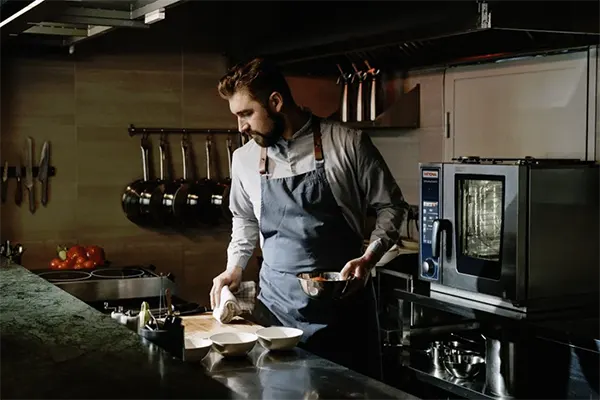
“A restaurant’s profitability is often hidden in its maintenance logs. You can’t build a five-star menu on a one-star budget for equipment upkeep.”
If you ever stand in the middle of a restaurant’s kitchen during the dinner rush, you’ll realize that the heartbeat of a restaurant isn’t just the chef, but the equipment. The rapid-fire clicking of the POS system, the rhythmic sizzle of flat top, or the hum of the Hoshizaki ice machine for restaurants are the sounds of a business that is in motion.
However, as a restaurant owner, these sounds can represent your biggest financial vulnerabilities. When you dive deep into the restaurant bookkeeping, food costs and labor margins are often the centre of attraction; however, if you treat your equipment as a buy or forget thing, you are moving towards a chaotic balance sheet. Proper budgeting of the equipment of your business is what differentiates the neighbourhood staples from the statistical failures.
Key Takeaways
- Budget for installation, specialized cleaning, and utility draw is not just the sticker price.
- Small and scheduled maintenance costs can save thousands in times of emergency repairs and lost inventory.
- You should work with your bookkeeper to use capital depreciation and tax incentives for new equipment purchases.
- You should always maintain a dedicated reserve fund for equipment replacement so that you can protect your primary cash flow.
Equipment Costs as a Core Component of Restaurant Bookkeeping
Equipment is often categorized as ‘fixed assets’, but in a restaurant, these assets are incredibly dynamic. The equipment gets heated up daily, cooled down daily, and is handled by dozens of people every day. This means that their value doesn’t just sit on a ledger; it gets eroded through wear and tear.
Adding equipment costs into your bookkeeping isn’t just about recording the initial purchase price; it is about keeping track of the total cost of ownership.
How Equipment Expenses Impact Restaurant Financial Planning
Financial planning in the hospitality industry is often a tight race. You may be celebrating a 3% decrease in food waste, only to have the profit wiped out by an emergency repair bill for an unmaintained dishwasher. Equipment expenses have a deep impact on your cash flow in two ways:
- The predictable impact, including depreciation and routine service
- The catastrophic effect, including sudden failure
Today’s world is interconnected, where planning must also account for digital risks. The global cost of cybercrime is projected to exceed $1.1 trillion annually. Even small businesses are not immune to the fallout of a cyber incident that can lock down your digital inventory or payment systems. Without a dedicated equipment and security line item in your budget, you are gambling with your working capital.
Major Restaurant Equipment Costs to Include in Your Budget
When you sit down to take a look at the capital expenditure, you need to look beyond the shiny stainless steel. Many owners forget that the hidden costs are often the ones that will affect their budget the most. You have to account for installation, ventilation systems, and even the floor reinforcement costs.
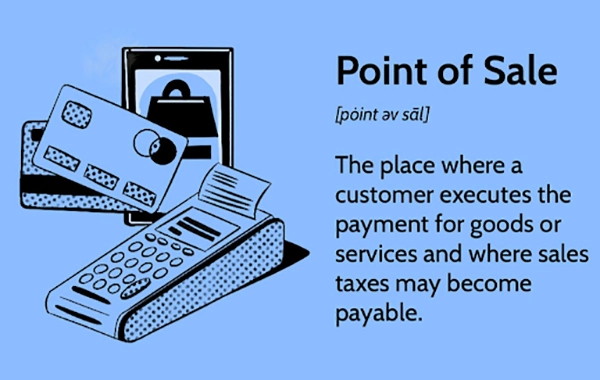
Beyond the hardware, there is the software. In the modern kitchen, your Point of Sale (POS) system and kitchen display screens are as essential as your range. Budgeting on the equioemnts upfront prevents those mid-quarter surprises that can slow down your growth.
Managing Equipment Costs Through Accounting Controls
Now, the question comes how you can prevent these costs from spiralling? You implement controls, which in bookkeeping terms refer to maintaining an Asset Registry. This is a document that lists every piece of equipment, its warranty status, purchase date, and expected lifespan.
By tracking these details, you can move from reactive maintenance to preventive maintenance. As the saying goes, A stitch in time saves nine; it is always better and cheaper to replace a $50 belt today than a $2,000 motor tomorrow. Moreover, proper accounting controls allow you to maximize the tax benefits.
Building a Realistic Equipment Budget for Long-Term Restaurant Success
A realistic budget is not just a static document; it is a roadmap. And to build a roadmap that actually works, you need to consult your team, your chefs, and managers. They are well aware of which burners are finicky and which fridge could make a strange noise.
Your long-term budget should include several things, such as:
- The Maintenance Buffer: It can allocate 1-3% of monthly updates, and hardware gets refreshed every 3-5 years.
- The Replacement Cycle: It can estimate the expiry date for every important appliance.
- Technology Upgrades: Budget for hardware and software updates gets refreshed every 3-5 years.
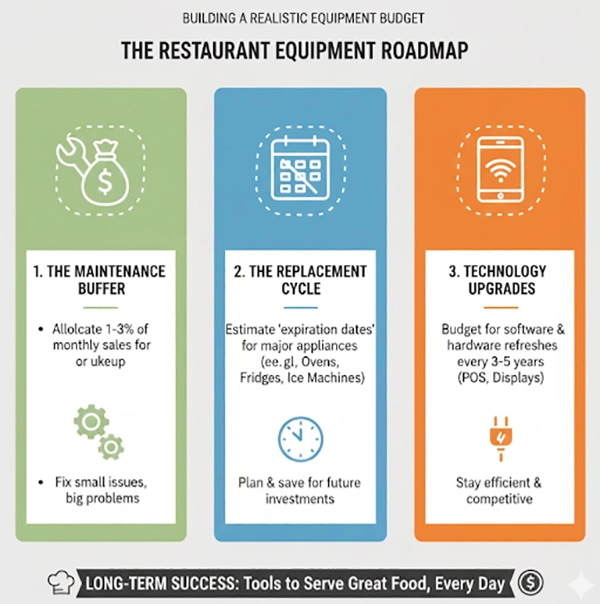
Success in this industry is not just about serving great food; it is about ensuring you have the tools to serve that food every single day without any financial trouble.
Author - Shourya Kumar

Finance Writer
Table of Contents
- Equipment Costs as a Core Component of Restaurant Bookkeeping
- How Equipment Expenses Impact Restaurant Financial Planning
- Major Restaurant Equipment Costs to Include in Your Budget
- Managing Equipment Costs Through Accounting Controls
- Building a Realistic Equipment Budget for Long-Term Restaurant Success
Related Posts