The three tests of solvency are, i) balance sheet test, ii) cash flow test, and iii) capital adequacy test.
Updated Feb 24, 2026
How Accountants Evaluate Client Solvency Before Recommending Debt Consolidation
Accountants are extremely important for businesses and individuals to make informed financial decisions. One of them is to decide whether it is worth it to consolidate current obligations. Before recommending any course of action, a solvency analysis is extremely necessary.
According to Deloitte, insolvencies reached 875 in 2024, a 32% increase from the previous year.
Solvency evaluation ensures that the new repayment structures lead to better stability and less financial burden. This is a systematic process involving reviews of income, liabilities, assets, and long-term sustainability.
In this article, I will inform you about client solvency and how accountants assess it. In case it’s bad, the following section also lists how accountants determine whether to propose a proper debt management plan to improve it.
KEY TAKEAWAYS
- A business with poor solvency cannot function properly for a long time.
- Accountants calculate a company’s solvency and decide the countermeasures based on its status.
- Solvency involves assessing: financial position, income, debt, cash flow, assets and liabilities, and risks.
- Debt consolidation is a good strategy against bad solvency, but recommending it requires careful assessment.
Financial Position Review
The first thing a competent accountant does is to gauge the financial situation of the client. This entails procuring details of unpaid balances, payment history, and total liabilities pertaining to all creditors. If you have no clear picture of the client’s position, you cannot estimate whether debt restructuring will be any help.
It is also important to check whether the offered information is correct. To make sure that the statements, credit reports, and supporting documents disclose liabilities fully, accountants tend to cross-check them. This enables us to avoid risk underestimation. As a result, the recommendations are only based on realistic assumptions as opposed to optimist figuring.
Income Assessment
The most important determinant of a good solvency is a stable and predictable income stream. Accountants get to study the employment history, business revenue patterns, and any other means of secondary income to establish reliability. Stability is more important than short-term peaks because long-term payment schemes require stable cash flows.
In addition to current gross income, accountants also need to mull over whether this can change in the future for any reason. The industry conditions, job security, and seasonal cycles are examined to determine whether volatility is probable. When money seems unpredictable, one is more cautious in addressing such possibilities as debt consolidation, which is based on regular payments in the future.
Debt Structure Analysis
Another solvency assessment factor involves analysing the debt structure. Accountants compare interest rates, repayment terms, and types of creditors to determine which ones demand the most urgency. High-interest debt rates should attract your attention more than the low-interest long-term loans, which may not be so urgent.
The payment schedules are also scanned. Uneven payment, overlapping due dates, etc., can lead to poor debt management, putting a strain on cash flow. The accountants can visually time obligations and thus determine whether consolidation will ease management or only postpone the latent issues.
Cash Flow Review
Cash flow analysis concerns how the money is moving in and out on a day-to-day basis. Accountants put monthly income against recurring costs to get to an understanding of whether we even have enough surplus to cover restructured payments. The fact that the flow of cash is positive is one of the signs that consolidation can be sustainable.
In case cash flow is negative or minimal, spending patterns need to be scrutinized. Accountants try to determine fixed expenses that are invariable and discretionary expenses that can be lowered. The step makes the recommendations realistic and consistent with the actual financial behavior of the client.
Asset and Liability Balance
Assets play an important role in assessing solvency. Accountants review assets that signify financial resilience, such as savings, property, and other resources. Although assets are not necessarily for paying back the debt, they enhance the perception of overall firm stability and can also offer a backup plan.
Liabilities are subtracted from these assets, and that gives us the net worth. The net worth can indicate that consolidation is not enough and the figure is rather negative. In this situation, accountants can seek solutions that with short term and long-term balance sheet sustainability.
Risk Considerations
Many factors can obstruct a smooth repayment. These are collectively called risks, and their assessment is crucial to our repayment success. Accountants take into account health problems, family life, and economic statuses that are likely to impact the future earning power. These qualitative aspects are necessary to have the concept of solvency beyond the numbers.
They also predict the possibility of a default in this arrangement. Accountants carefully assess whether the repayment failure would result in critical punishment or the loss of valuable assets. Such risk scrutiny is useful in safeguarding the clients against solutions that are not useful but have some hidden risks.
Recommendation Evaluation
Debt consolidation is one of the options to improve client solvency. Accountants recommend this way only after evaluating it against other options. A consumer proposal can also, in certain situations, provide a better way out by formally reorganizing the legal protection of duties. This comparison ensures that the strategy adopted is congruent with the solvency objectives as well as the long-term recovery objectives.
A debt management plan is useful for specific cases only, as stated in the following infographic:
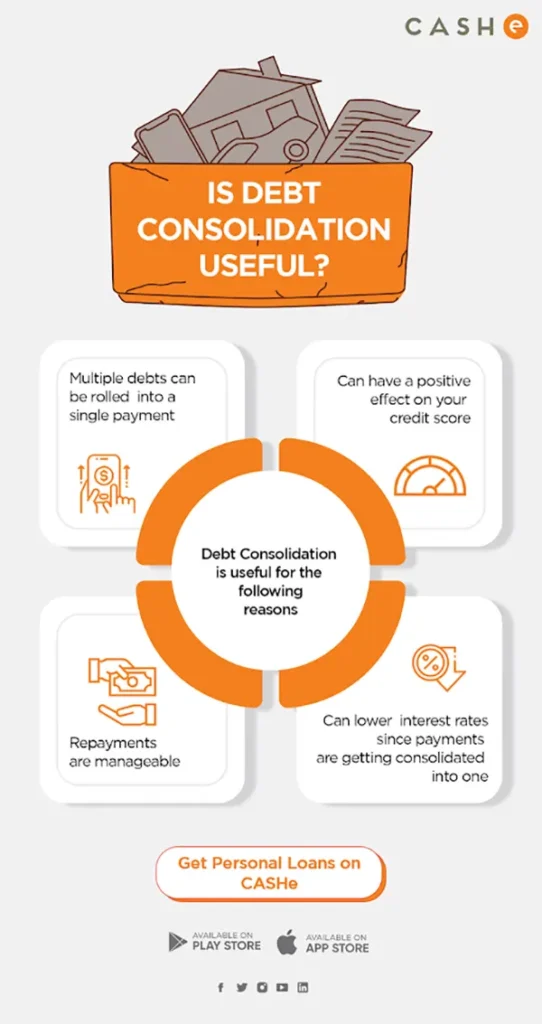
A debt management plan is considered only when we are sure that the client can fulfill the new terms. Accountants ensure informed decision-making on the part of the clients so that they know their commitments and expectations. With such systematic analysis, solvency is the driving force of all the recommendations.
Conclusion
Proper solvency analysis gives a correct and full financial picture to the accountant. Only after a careful examination of the stability of income, debt structure, cash flow, assets, and risk factors do they recommend any course of action. And that has to be sustainable, not a short-term relief. This professional attitude helps clients guard against signing deals that would aggravate their position.
The process should beget long-term financial recovery. As a result, the client also becomes more confident about their money management. The ultimate decision on whether to consolidate the debts, or file a consumer proposal, or choose a completely different option is decided only after a proper evaluation of what the client can reasonably afford. Accountants can assist the clients to proceed towards stability with clarity and control through professional analysis and responsible planning.
Author - Shourya Kumar

Finance Writer
Related Posts