Ans: It is the identification, assessment, and mitigation of risks and threats that may cause financial or operational issues to the retail business in the future.
Updated Mar 23, 2026
Retail Risk Management: 10 Threats To Watch Out For

Retail businesses always operate in an increasingly complicated environment, where risks can come from anywhere, no matter how careful you are.
As these threats constantly evolve, every aspect of retail management should be focused on minimizing these financial and operational risks, whether everything is handled in-house or with the help of a retail fulfillment partner.
Let’s learn about the most common risks and threats that retail organizations face and how you can avoid them and strengthen your business strategy for the long term.
Key Takeaways
- Evolving risks that impact profitability, operations, and customer trust
- Cybercriminals target consumer and payment data, increasing the chances of a huge data breach and loss for the business
- A mismanaged inventory leads to shrinkage and theft issues. Teams and staff need to be trained to prevent these issues
- Retail businesses must maintain adaptability and adopt flexible pricing strategies to counter economic uncertainty and inflation
Top 10 Threats to Watch Out For
Retailers face a wide range of evolving risks, and each threat can impact profitability, operations, and customer trust. Staying aware of these threats helps businesses take proactive measures and remain competitive.
Threat No.1: Payment Fraud and Chargebacks
Payment fraud remains one of the most pressing challenges in both physical retail and e-commerce. Unauthorized transactions are often done through stolen card details, identity theft, or unauthorized purchases.
These risks can be minimized by setting up secure payment gateways, enabling MFA (multi-factor authentication), using AI-powered tools, and partnering these systems with clear policies and transaction monitoring to minimize the risk of fraud and chargebacks.
Threat No. 2: Cybersecurity and Data Breaches
Cybercriminals frequently target retailers due to their large volumes of customers and payment data.
But data breaches can be the reason for financial losses, legal penalties, and severe reputational damage, so strong cybersecurity practices are more important than ever.
You need to think about setting up encrypted systems, firewalls, regular audits, and employee awareness training to proactively protect your data.
Threat No. 3: Inventory Shrinkage and Theft

Inventory shrinkage directly affects the business’s profitability, as even the smallest miscalculations can add up over time, increasing the problem exponentially.
Whether it’s due to employee theft, mismanaged inventory, or any other common problem, you’ll want to arrange better inventory tracking systems and surveillance systems.
The key to minimizing these losses is by training your team well to handle these situations effectively and prevent costly mistakes.
Threat No. 4: A Lack of Retail Fulfillment Visibility
Limited visibility across retail fulfillment operations makes it harder to track inventory, order status, and real-time performance.
When your systems aren’t fully aligned, small discrepancies go unnoticed, and that affects both your operations and the customer experience.
To prevent these risks, you’ll want to strengthen how your systems integrate with 3PL providers and open clear lines of communication so everybody is up to date at all times.
Did You Know?
According to the National Retail Federation (NRF), U.S retailers estimated $112.1 billion in losses due to shrinkage in 2022, mostly due to theft, fraud, and other process failures.
Threat No. 5: Operational Errors and Inefficient Processes
Manual processes and outdated systems often lead to errors in billing, inventory, and reporting. These inefficient processes can slow down operations and increase costs.
AI-powered automation programs perfectly integrated into existing systems help streamline and ease workflows while also reducing the chances of human error, leading to improved overall efficiency.
Threat No. 6: Regulatory Compliance Challenges
Retailers must follow various regulations; the industry is highly regulated, especially when it comes to payment processing, consumer protection, and data privacy.
If you don’t meet these requirements, you could face fines or legal complications. Stay updated with your industry standards; failing to meet these requirements can result in fines and legal complications.
Threat No. 7: Cash Handling Risks
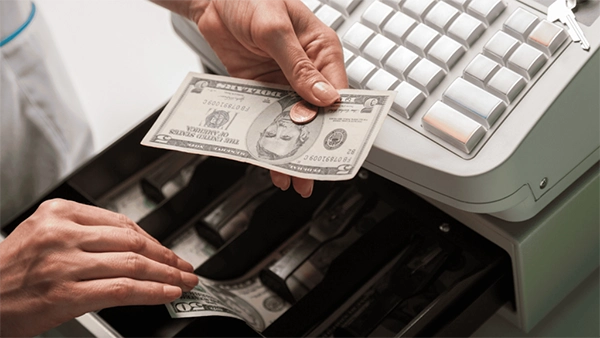
Handling cash in itself is a risky task. Theft, mismanagement, and human error are some of the risks that can cause major security issues
That is why modern cash management solutions, secure storage systems, and digital payment options help reduce dependency on cash. It also helps to improve accountability.
Threat No. 8: Reputational Damage and Customer Trust Issues
Negative customer experiences and poor service can quickly damage a brand’s reputation—especially if your security is questionable. Today, a single bad review can spread quickly.
Retailers now should focus on delivering good customer experiences, addressing complaints promptly, and maintaining transparency to build long-term trust.
Every person handling a cash drawer and providing customer service should know how to de-escalate difficult situations and work towards strengthening customer trust.
Threat No. 9: Technology Failures and System Downtime
POS system outages, software glitches, or network failures can stop operations. These disruptions are extremely vulnerable during peak business hours as it results in loss of sales.
Reliable infrastructure, regular system maintenance, and access to technical support are crucial to minimizing downtime. Backup systems can also ensure business continuity.
Threat No. 10: Economic Uncertainty and Consumer Behaviour
Inflation, changes in consumer spending behavior, and market trends can affect retail performance, but that uncertainty makes planning both frustrating and challenging.
So, modern retailers must adopt flexible pricing strategies, monitor evolving market trends, stay adaptable, and maintain a strong financial plan at all times.
This way, you’re giving yourself the best chance of getting through unstable periods unscathed.
Strengthening Your Retail Risk Management Strategy
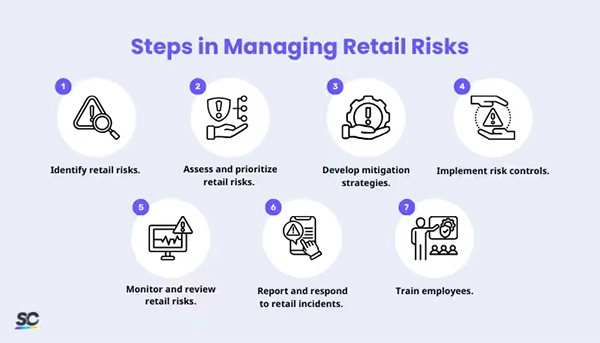
To manage risks, retailers must take a proactive approach. It’s a high-risk market, but with modern technology and security tools, it’s entirely possible to safeguard your operations and data.
Make sure to train your staff on updated practices to follow and partner with trusted financial and retail technology providers.
Combined, this helps you improve security, streamline processes, and make sure you’re staying industry-compliant across the board.
Learn more about how to deal with the associated retail risks with this infographic:
Conclusion
Retail risk management isn’t an occasional effort. It’s an ongoing process in an ever-evolving industry. As new threats come in, businesses must continuously adapt and strengthen their defenses.
By understanding these risks and implementing the right strategies, retailers can protect their operations, maintain customer trust, and achieve long-term success.
Author - Shourya Kumar

Finance Writer
Related Posts