Technology enables efficient production to match global demands while also giving small businesses a platform.
Updated Mar 13, 2026
The Role of Technology in Turning Craftsmanship into a Scalable Business Model

“Any sufficiently advanced technology is indistinguishable from magic.”
— Arthur C. Clarke (Fiction Writer)
And in today’s age, technology is actually magic.
Earlier, you could be the best of the artisans, but that doesn’t mean that it would get you name and fame across oceans.
But innovative tech now doesn’t just get your talent recognized all over the world; you can monetize it and actually deliver your pieces to your admirers sitting in the farthest corners of the world with ease.
Many artisans hear that often, but don’t exactly know how to achieve that.
In this article, I’ll clear all your doubts around how you can take your heartily made products to everyone in the world. Discover the technological tools that can make it happen in a jiffy.
KEY TAKEAWAYS
- Technology is enabling craftsmen to build global businesses.
- AI, 3D printing, and e-commerce are helping to make that happen.
- Smart equipment is accelerating production, but the creative part is still with artisans.
- AI and additive manufacturing help with environmental sustainability
When Technology Meets Tradition
Tech is turning small traditional craftsmanship businesses into full-blown, scalable global brands.
It enables local artisans to reach wider, global markets. Famous marketplaces like Etsy and Shopify are helping people take their products to a global scale.
Smart technological tools can also help them dramatically increase their production efficiency. Tools like CAD and 3D printing enable swift designing and production, keeping the unique, handmade charm intact in products at the same time.
Furthermore, they can use digital tools to manage their inventory more effectively. The use of the aforementioned marketplaces also reduces your supply chain bottlenecks.
The Customization Paradox
Technology is progressing at the speed of light.
Industry 4.0 has brought tools like CAD, 3D printing, and AI with it. These tools have enabled easy scaling of traditional craftsmanship.
The concept of “mass customization” is central to pushing out bespoke, high-quality products through a quick and smooth production cycle.
No matter how hard you try, the traditional, time-intensive production can’t keep up with the volume and speed that the mass market demands. Only embracing the digital can enable you to do that without losing your personal touch in the design aesthetics of the products.
CopperSmith is one such brand that produces at scale while keeping the old-world charm of handmade kitchen products.
Precision Tools, Human Touch
Technology has provided artisans with precision tools to craft products efficiently without any compromise in quality. These tools consist of CNC machines and laser cutters.
You essentially become a “digital artisan.”
AI is now simply taking in the data on intricate manual craftsmanship processes and replicating them to cut production times and keep the product customizations as well.
You just have to make some adjustments in the prompts here and there every so often. To keep the uniqueness of the products, small batches should be produced. However, keep them high-quality and just ship them to the world.
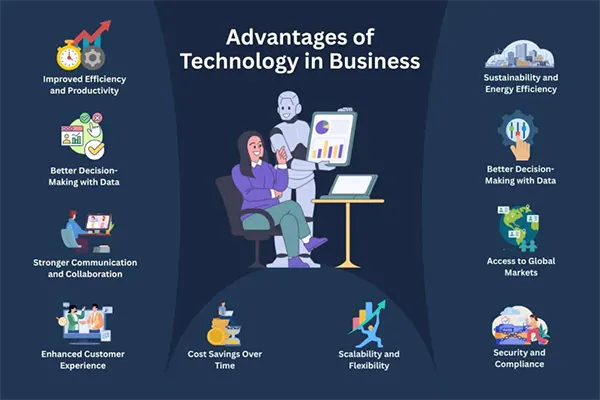
The following infographic summarizes how technology can help you with taking your small-town artistry to the world markets:
The Service Equation
These cutting-edge technologies, enabling local to global, are not there to steal the craft and professions. Humans are still needed to run the system.
The automation and e-commerce platforms handle everything, leaving the artisans to focus on their core creative work. The technological systems handle the repetitive operational and logistical parts of the business.
Sustainability Through Smart Systems
Technology is enabling bespoke artisans to build sustainable businesses. Systems like AI, IoT, and additive manufacturing are optimizing production for minimal waste. The automated supply chains only help the artisans with adopting circular economy best practices.
These artisans are also only producing on demand, ensuring sustainability so that no product perishes in inventory or warehouses. AI predicting consumer demand is keeping craftsmen away from overproduction and underproduction.
Blockchain technology is also helping with tracking materials, enhancing authenticity while reducing the carbon footprint.
Social media platforms are augmenting the market reach of these handicrafts. On the other hand, AR/VR is allowing customers to better experience them from the comfort of their homes.
The Road Ahead
So, don’t wait any longer. It’s time to take your talents from the alleys of your town to the markets of the world.
Technology is enabling local craftsmen to build and run a global business, making them “digital artisans.” AI, 3D printing, and e-commerce platforms are the tools that are helping to make that happen.
The technology is only accelerating the production; the creative part is still in the hands of the artisan, keeping the product’s uniqueness intact.
AI and additive manufacturing are also keeping production waste to a minimum, helping with environmental sustainability.
May the technology and originality both be with you!
Author - Akachi Kalu

(Accounting Expert & Content Writer)
Related Posts