Accountants enjoy standard hours in the off-season, but in the busy season, they have to work 50-60 hours per week.
Updated Feb 23, 2026
Work-Life Balance for Accountants: Practical Strategies That Actually Work
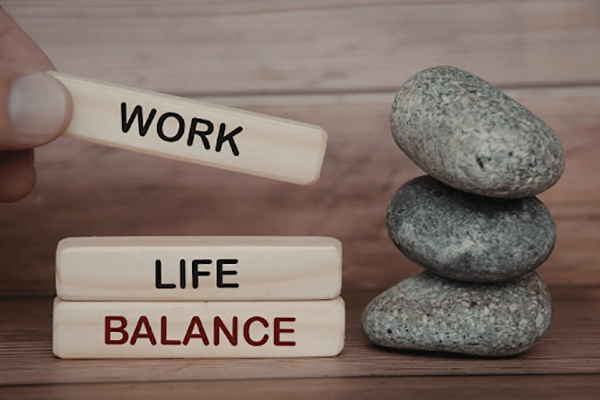
“There is no such thing as work-life balance – it is all life. The balance has to be within you.”
– Sadhguru (Indian Guru)
And that’s completely true for financial personnel. When the peak season comes, your grind becomes your entire life. There go endless hours of work to fulfill overwhelming client expectations. On top of it, you have to meet the quick deadlines and strict regulations to the T.
But, going on like this usually blurs the line between job sincerity and individual health. And then that becomes a vicious loop. Your professional life starts affecting your health and personal life, and those start denting your work.
All this can make you frustrated with your job and life in general.
Working less is not an option, never is. So, what should accountants do to balance job and life in these peak seasons? Broadly, you have to work smarter, following efficient routines.
In this article. I’ll provide some practical, realistic steps accountants can start following today to deal with high workloads so that they can continue living a stable life, undisturbed by job responsibilities.
KEY TAKEAWAYS
- Accounting is one of the most hectic professions, so maintaining work-life balance becomes even more important.
- Never compromise on health or sleep; it’ll come to bite you back.
- Uninterrupted grind all day can take a toll on you; take regular breaks.
- Leave your work at the office gates; there’s no need to bring it home.
Rethinking Productivity in Peak Periods
In the finance world, productivity is usually gauged through the hours you spend at your desk. But the metric that actually matters and everyone should switch to is the output quality of the accountant. During tax season or audit cycles, long hours do not always translate into better work.
What you can do is to identify high-impact tasks by asking:
- What must be completed today to keep projects on track?
- Which tasks require deep focus?
- What can be automated, delegated, or put off for later?
Block focused time for complex tasks such as reconciliations, financial analysis, or client reviews. Silence notifications. Close unused tabs. Even a 1-1.5-hour focused work session can reduce the need for late-night slogs.
Equally important is setting client boundaries. Clear communication around response times and project timelines prevents unrealistic expectations. When expectations are realistic, pressure decreases.
Protect Sleep as a Non-Negotiable
It’s not the first time you’ve sacrificed your sleep during those busy months, right? Well, it’s slowly eroding your health as well as your productivity. Many accountants convince themselves they’ll “catch up later”, but that’s not how sleeping quotas work. Sleep debt compounds quickly, affecting memory, judgment, and attention to detail – all critical skills in accounting.
I recommend creating a wind-down routine, which can include:
- Shutting down emails at a set time.
- Avoid using financial spreadsheets at least an hour before bed.
- A cool, dark, and screen-free bedroom.
Physical comfort is not a luxury; it’s a necessity for you to function optimally in life and work. High-quality, comforting mattresses and a cool environment help you rest more deeply, which shows in your next-day performance. Brands like Doze Bedding focus on breathable, comfortable sleep essentials designed for recovery after demanding days. Choosing supportive, comfortable duvet covers, such as those available at dozebedding.com can help create a bedroom environment that signals to your body it’s time to switch off from spreadsheets and into rest mode.
Better sleep does not just improve mood. It sharpens analytical thinking and reduces costly errors – something every accountant values.
Build Micro-Recovery Into the Workday
People perceive work and life in work-life balance as mutually exclusive aspects. But in reality, they go in parallel. You can ignore your job while living, but can you stop living while you work? No right.
In your 8-10-hour workdays, integrate small recovery windows. A five-minute stretch, a short walk around the building, or simply stepping away from your desk resets mental focus.
Try these simple habits:
- Stand up every hour.
- Lunch breaks need to be as important as client meetings.
- Step outside for fresh air, even briefly.
These small breaks prevent cognitive fatigue. When your brain is tired, you double-check numbers more often, re-read the same lines, and take longer to make decisions. Recovery time improves efficiency, which ultimately protects personal time later.
Create Clear End-of-Day Boundaries
A great deal of people lug their work to their homes. Most mentally, but some even in actuality, as this WFH thing has started. With remote access and cloud-based systems, you never get to log off. The grind is 24/7.
Well, to mark the workday over, you can consider creating a structured end-of-day ritual. This could include:
- Reviewing tomorrow’s priorities.
- Organizing your workspace.
- Writing a short task list for the next morning.
- Logging out of work platforms intentionally.
Once you define a wind-down routine, only then does your brain register a closure. Without it, unfinished tasks linger in your mind till you come back in office the next day.
Mixing up spaces and corresponding tasks can also add to your troubles. If you are on remote, avoid completing client files from your bed or couch. Define a distinct workspace and keep the rest of your place for personal recreation and rest. This separation of physical spaces reinforces boundaries in your mind.
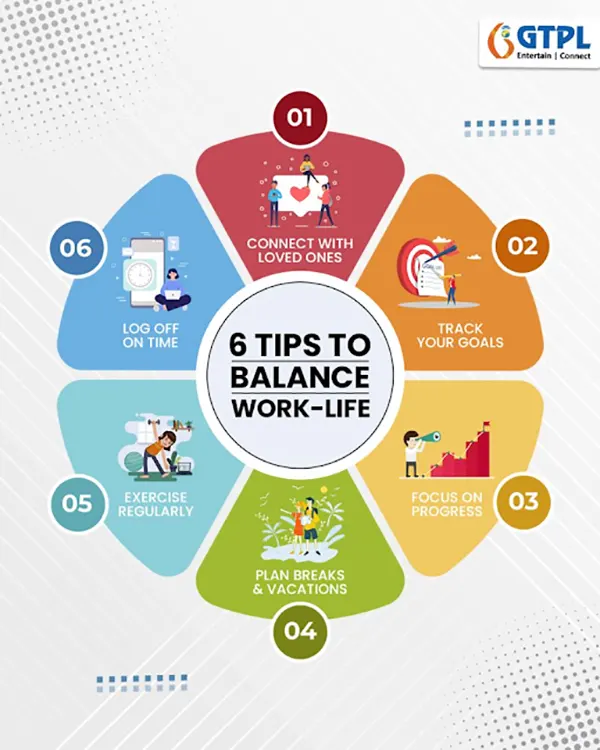
The following infographic summarizes some tips on maintaining work-life balance as an accountant.
Use Technology Strategically, Not Constantly
Technology has improved efficiency across sectors, including finance. Automation tools, cloud-based accounting, and workflow software have all contributed to saving time. But being constantly online, be it for personal or professional reasons, has given rise to another problem: digital overload.
To overcome that, think about adopting these habits:
- Stop receiving notifications on non-urgent messages.
- Batch email checks during specific times of the day.
- Implement project management tools.
Rather than constantly addressing emails and messages as and when you get one, block specific time windows to respond. Clients appreciate consistency in communication more than immediate responses in the middle of the night.
Technology is meant to reduce stress, not increase it. It can be a powerful ally in strategically achieving this.
Prioritize Physical Health During Busy Season
Health is one of the first things that takes a backseat during a busy season. Workouts go completely out of the picture, you start eating on the go, and coffee cups keep you awake, grinding.
You don’t need to overhaul your entire fitness regimen, instead try these:
- Prepare healthy meals in advance of the busy season.
- Have healthy snacks available in the office.
- Schedule workout sessions two to three times a week.
- Stay hydrated throughout the day.
Exercise has been proven to boost moods and reduce stress hormones. A 20-minute walk can reset your entire attitude after a difficult client call.
When physical health is prioritized, mental toughness is more easily maintained. Accountants who prioritize physical health tend to be better able to manage stress and recover more easily after a long, difficult day.
Normalize Conversations About Workload
Under a heavy load, most of the accountants and bookkeepers suffer in silence. Sometimes it’s the toxic workculture of agencies, sometimes it’s the employee who thinks that speaking out might leave a bad impression of himself and impact his career growth. However, firms that normalize conversations around pressure tend to be more successful in the long run.
When deadlines keep piling up, making it almost impossible to focus on completing projects, bring it up. Not as a problem, but as a solution. For example:
- Suggest staggered deadlines.
- Suggest workflow changes.
- Identify areas for automation.
- Recommend support during peak seasons.
For healthy organizations, burnout is recognized as leading to turnover and reduced accuracy. Open communication is beneficial for both individuals and organizations.
For independent accountants and business owners, the situation is more critical, and modeling healthy boundaries for their teams is essential.
Invest in Your Recovery Outside of Work
If you can’t get any breathers, your life outside job is your only solace. So, for your work-life balance, consider having recovery strategies outside of work. It doesn’t mean lavish getaways. It’s enough to:
- Having one evening per week for family or hobbies.
- Creating a calm sleep environment that supports full rest.
Brands such as Doze Bedding often emphasize that recovery is part of performance, not separate from it. Accountants who prioritize rest, personal time, and comfortable sleep conditions often return to work sharper and more focused.
Recovery is not indulgence. It is maintenance for high-level thinking.
Conclusion: Well-Grounded Success Requires Sustainable Habits
Accounting has always been and continues to be associated with deadlines, compliance, and high-focus work periods. These issues don’t seem to be going anywhere. The only thing we can do is change the way we manage our time, our energy, and our recovery.
A balanced lifestyle is never about perfection. It’s about processes that include proper sleep, boundaries, and open communication. While these strategies don’t make busy seasons go away, they make them bearable.
In the long run, performance endures only if well-being endures. Accountants who view their physical and mental health as fuel for work, not in conflict with it, have lasting careers.
Author - Shourya Kumar

Finance Writer
Table of Contents
- Rethinking Productivity in Peak Periods
- Protect Sleep as a Non-Negotiable
- Build Micro-Recovery Into the Workday
- Create Clear End-of-Day Boundaries
- Use Technology Strategically, Not Constantly
- Prioritize Physical Health During Busy Season
- Normalize Conversations About Workload
- Invest in Your Recovery Outside of Work
- Conclusion: Well-Grounded Success Requires Sustainable Habits
Related Posts