An RIA is a financial professional or firm that acts as a fiduciary in the best interests of the client.
Updated Feb 26, 2026
RIA Investment Support: What It Really Means (and How to Choose the Right Partner)

Even you might have questioned that if people can do a job, even two, why don’t they simply start a business of their own? Well, because a business is like juggling three jobs at once.
First, you have the core business that you handle and grow. The day-to-day operations include client meetings, paperwork, tech troubleshooting, rebalancing, performance reporting, billing, and the constant tug-of-war between “what’s urgent that keeps business afloat today” and “what actually moves the firm forward in the future.”
In addition, you need to act as a compliance officer and an investment banker. All this takes a lot of time, effort, and resources that could have been used for the growth of the core business.
This is why, as businesses grow out of their foundational years, they start looking for investment guidance: an RIA (Registered Investment Advisor).
However, the problem with hiring one is that an RIA can mean everything and nothing.
Some of them provide investment model construction and portfolio consulting. Others do compliance and registration. Some even help with back-office outsourcing and operations. Generally, it’s a disproportionate mix of either any two or all three of these.
Emerging tech is playing an important role in RIA services. Almost 30% of tech-heavy RIA firms achieved above-average growth in the past 3 years, but only 9% of low-tech firms could do it (Source).
In this guide, I’ll tell you what RIA counseling actually includes and their service models, why they’re actually needed, and how to evaluate and choose the right RIA partner.
KEY TAKEAWAYS
- RIAs advise businesses regarding their investments and even manage portfolios.
- Hiring an RIA frees up your time and other resources to focus on the core business.
- Before hiring one, decide on your requirements and best fit.
- Decide if you just want basic investment management or to optimize your portfolio for growth.
What “RIA Investment Support” Covers (and What It Usually Doesn’t)
RIA investment support helps businesses:
- Deliver better client outcomes (especially after-tax and risk-adjusted)
- Reduce operational friction and manual work
- Maintain compliance readiness without constant fire drills
- Scale client service without scaling headcount at the same pace
But providers vary widely. To choose well, it helps to map support into three practical buckets:
1) Investment & Portfolio Support
This is the most literal interpretation of “investment help.” It includes services like:
- Model portfolio design or co-design
- Asset allocation research and oversight
- Ongoing portfolio review calls and updates
- Active/passive strategy blending
- Tax-managed investing support
- Portfolio analytics and performance reporting improvements
Firms that specialize here tend to speak the language of outcomes: risk, diversification, tracking error, and after-tax returns. The value is often in repeatable processes and institutional research that’s difficult for a small team to reproduce.
2) Compliance & Registration Support
This service is essential, even if it doesn’t sound exciting. Many RIAs engage outside help for:
- SEC or state registration filing support
- Compliance program design (policies, procedures, documentation)
- Ongoing compliance consulting and maintenance
- Mock exams and readiness assessments
- Tools and workflows to keep “a year in compliance” organized
Even highly capable firms can struggle here simply because compliance is time-consuming, and missing details can be costly.
3) Operations, Back Office & Practice Infrastructure
This is where many RIAs “feel the pain” first. Support can include:
- Client onboarding workflows and account paperwork tracking
- Money movement requests and account maintenance processing
- Billing administration and quarterly reporting processes
- Client portal setup and documentation management
- Practice management, admin, and operational task execution
If investment decisions are the “brain,” operations are the “circulatory system.” When ops break down, even great investment work gets buried under delays and client frustration.
The Real Reason RIAs Seek Support: Time Isn’t the Only Constraint
Businesses hire RIAs to save time for their core operations, but that’s not the only benefit they get. Many bigger hidden constraints force them to hire RIAs:
- Context switching: Jumping from portfolio analysis to compliance logs to client requests destroys deep work.
- Single-point-of-failure risk: If one person owns all “how we do things,” the firm becomes fragile.
- Client service lag: Response times slow, admin errors increase, and the client experience becomes inconsistent.
- Growth ceiling: New assets come in, but operational capacity doesn’t keep pace.
The best support partners aren’t “extra hands.” They’re systems—repeatable workflows, structured reviews, technology scaffolding, and specialist assistance that stabilizes the business.
Common Support Models RIAs Use (With Real-World Examples)
Not all RIA firms work the same. There are many service models in the RIA industry.
Model A: Compliance/Registration-First Support (Especially for New RIAs)
Newly independent advisors often need help navigating registrations, documentation, and regulatory expectations.
A common approach is working with firms that focus heavily on:
- RIA formation and registration
- Compliance program build-out
- Ongoing compliance services and readiness processes
This model is ideal if the “risk and regulatory load” is your biggest stressor, or if you’re transitioning from a broker-dealer environment where compliance was more centralized.
Model B: Investment Platform / Custom Model Portfolio Support
Some firms seek RIA services primarily to strengthen investment delivery while maintaining their brand identity and advisory autonomy.
These solutions often include:
- Custom models aligned to your investment philosophy
- Ongoing allocation updates informed by market outlook
- Dedicated contacts and quarterly portfolio review calls
- Optional support for tax-managed investing and SMAs
The best providers here help you scale consistent portfolio management across clients without losing your unique approach—especially helpful when the firm adds advisors or grows AUM quickly.
Model C: Full Outsourcing Across Ops + Compliance + Investment
This model is common among advisors who want independence but don’t want to build a full internal operational stack.
These platforms typically offer:
- Back office services for onboarding, servicing, reporting, and billing
- Compliance support and consulting
- Optional asset management help (portfolio consulting, trade execution, etc.)
- Add-ons like business continuity, succession planning, marketing support, or financial planning assistance
This model can be effective for lean RIAs that want to stay lean—but it requires careful diligence to ensure the platform’s processes match your service expectations.
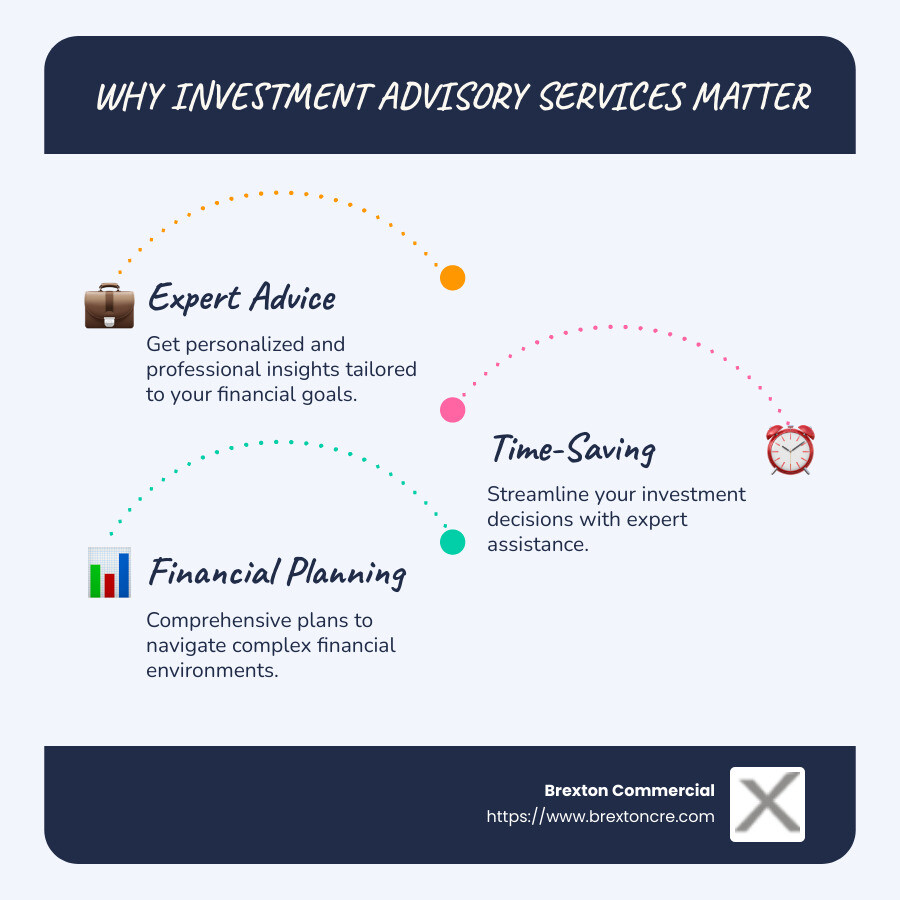
The following infographic summarizes the three main benefits you get by hiring a perfect RIA partner:
How to Evaluate an RIA Investment Support Partner (A Practical Checklist)
There are top RIA partners, but there’s no best for everyone. For you, the best RIA would have to align with your operations. Remember, you don’t need support just for the sake of it. You want the investment finance burden to be lifted off your back so that you can focus on the core business operations.
Here’s how to evaluate RIA options beyond their marketing claims to get to the perfect investment partner for your business.
1) What problem are they actually solving?
Ask a blunt question: “In 90 days, what will be materially different in my firm if we work together?”
A good partner should be able to describe changes like:
- Reduced time spent on admin tasks
- Clean, repeatable client onboarding and service workflows
- Stronger portfolio consistency across households
- Better documentation and exam readiness
If the answer is vague (“we’ll streamline things”), that’s a red flag.
2) Do they provide execution or only advice?
Some providers consult; others do the work.
Both can be valuable, but you need to know which you’re buying. If your bottleneck is implementation, “advice-only” may not move the needle.
3) What does ongoing support look like?
Look for specifics:
- Is there a dedicated helpline contact?
- Are there scheduled portfolio review calls?
- How do they handle updates, changes, and exceptions?
- Is support centralized or fragmented across departments?
A partner with structured touchpoints tends to be more reliable than one that relies on ad hoc communication.
4) Is technology integrated or layered?
RIA providers often “bundle” tech. That can be helpful—or it can become a messy stack.
Ask:
- What tools are included?
- What’s optional?
- How do workflows live inside the system?
- Who owns the configuration and maintenance?
The best setups reduce friction rather than adding logins and duplicated work.
5) How transparent is pricing?
Some services price based on revenue percentages, flat fees, or a hybrid.
There’s no single right approach, but transparency matters. You should understand:
- Minimums and thresholds
- Add-on fees (e.g., registration, compliance setup)
- What’s included vs extra
Your goal is predictable support costs tied to tangible outcomes.
The “Support” That Actually Moves the Needle for Growth
If you want the “support” to go beyond maintenance to AUM growth and considerable profitability, focus on the following high-impact areas:
Standardized portfolio management (without becoming generic)
Whether you build models internally or use a partner, the win is consistency.
Clients notice when your firm has a repeatable, explainable investment approach. Your team benefits when portfolios don’t require reinvention for every case.
Better after-tax outcomes
Tax-managed investing isn’t just for ultra-high net worth clients anymore. RIAs who improve after-tax returns often create a clear differentiator that strengthens retention.
A compliance system that doesn’t rely on memory
The best compliance service creates a “machine” that runs even when you’re busy. That means documentation, schedules, and workflows are built into the business—not dependent on someone remembering what needs to happen.
Back office workflows that protect the client experience
Operations isn’t glamorous—but clients feel it immediately.
Fast onboarding, accurate billing, timely reporting, and smooth servicing build trust. Trust builds retention. Retention compounds growth.
A Simple Decision Framework for Choosing the Right Support
The following framework would get you to choose the best RIA for your business fit:
If you’re growing fast but operations are strained…
Prioritize back office maintenance and workflow standardization. This is usually the first scaling choke point.
If you’re strong operationally but want better investment delivery…
Prioritize portfolio support, model construction, or tax-managed strategies—especially if you want to systematize outcomes across more clients.
If you want to stay lean and outsource most non-client-facing work…
A modular outsourcing platform can make sense, but diligence is crucial. Ask for process documentation, service standards, and exactly how exceptions are handled.
Final Thoughts: Support Should Create Leverage, Not Complexity
An RIA investment service isn’t another partner to be handled. The right RIA would make your firm feel lighter, more consistent, and more professional—because the operational noise quiets down, the investment process becomes easier to explain and deliver, and compliance stops living in the back of your mind.
The best signal you chose well is simple:
You spend more time doing the work only you can do—advising clients, leading your team, and building the firm you actually want to run.
Author - Veeramanchineni Lalitha

Masters of Business Administration from St Joseph's Institute of Management (Banglore)
Table of Contents
- What “RIA Investment Support” Covers (and What It Usually Doesn’t)
- The Real Reason RIAs Seek Support: Time Isn’t the Only Constraint
- Common Support Models RIAs Use (With Real-World Examples)
- How to Evaluate an RIA Investment Support Partner (A Practical Checklist)
- The “Support” That Actually Moves the Needle for Growth
- A Simple Decision Framework for Choosing the Right Support
- Final Thoughts: Support Should Create Leverage, Not Complexity
Related Posts