Navy, charcoal, and deep grey remain the strongest suit colours for banking because they feel formal without being theatrical.
Updated Jul 7, 2026
How To Dress as an Investment Banker

You know that feeling when you walk into a room, and you can tell, instantly, whether you fit or not – before anyone says a word? That is what is happening here.
Walk into a finance floor in something that begs for attention, and the room responds accordingly. Softly. Longer glances. An interlude that doesn’t really fit. Not everyone tells you that. But you sense it. That response is the real risk you’re managing.
Here are the details:
Key Takeaways
- Exploring grooming and accessories: what gets noticed when everything else works
- Explaining shoes: where quiet competence is tested daily
- Assessing how conservative is conservative enough for ties?
- Analyzing if a white shirt is safer than a good one?
Picking The Right Suit

A lot of people think dressing well means looking impressive. Sharp. Memorable.
In this world, that instinct works against you early on.
The safest early win is visual quiet – clothes that fade into the background so your competence can do the talking. It doesn’t have to do with killing personality.
It is about timing. Silence first. Personality later, once you have earned it.
There is a reason this works, and it is not mystical. In high-status, high-pressure environments, unfamiliar visual cues trigger evaluation.
Evaluation is brain power. People pigeonhole you and move on faster when your clothes fit a known template.
That categorisation happens fast – roughly 3-7 seconds of visual exposure. Long before you have opened your mouth.
A conservative suit quietly does three jobs at once:
- Removes novelty so unconscious scrutiny drops. Fabrics with reflectivity above a low-matte threshold or visible patterning larger than about 1 cm across break that effect.
- Visually aligns you with senior staff, shrinking perceived hierarchy. Most senior bankers stay within a tight colour band – navy or charcoal within about a 5-10 percent lightness variance.
- Keeps credibility portable across teams, floors, and client meetings. Portability improves when contrast ratios between suit, shirt, and tie stay conservative instead of punchy.
What trips people up is not navy versus charcoal. It is the stuff you do not think about at first: texture, sheen, lapels creeping past roughly 9-9.5 cm, fabric that flows too much and suddenly looks editorial under office lights.
Loud feels expressive. Neutral feels boring. Neutral is actually strategic. Especially when anxiety is driving the purchase. Neutral buys you safety now, freedom later. Once that silence is locked in, the next thing that matters shows up before you even sit down.
What Bag Signals You Belong in the Room Before You Speak?

Your bag arrives before you. It drops on the table. Slides beneath the chair.
Senior people clock it within the first minute, even if they would swear they did not notice.
Early on, most people grab a backpack because it is practical. Or a giant soft tote because it holds everything. Both choices quietly undercut you. Backpacks scream transition. Still moving. Still commuting. Soft bags collapse, wrinkle papers, and feel reactive instead of ready.
A structured leather briefcase fixes that tension cleanly:
- Holds documents flat and controlled, so A4 or US Letter does not curl. That requires internal panels that resist flex under about 1-2 kg of load.
- Stands upright on its own, with a base depth around 3-4 cm so it does not slump beside your chair.
- Matches senior visual language, the same rigid or semi-rigid cases used by partners, MDs, and external counsel.
I found out about Von Baer from this guide, and really liked their clean-lined, full-grain leather briefcases – a balanced fit of quiet luxury and professional statement.
A simple rule that helps: treat the bag like meeting equipment. Carry only what that meeting needs. Keep the load under about 3 kg so the structure holds. Space inside a structured briefcase does not look wasteful. It looks deliberate. And the moment you stop digging around, people relax around you.
Once the bag fades out, attention naturally moves upward – to the suit itself.
Should the Suit Look Tailored or Invisible?
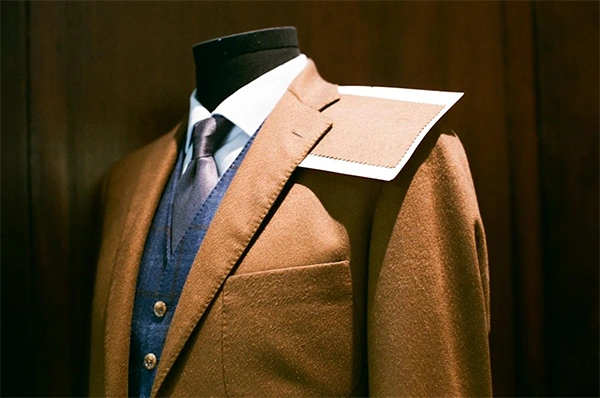
This is where ambition usually overcorrects. A sharply contoured suit feels powerful when you are standing alone. Then you sit next to someone senior whose jacket just hangs. No pulling. No drama. And suddenly yours feels loud.
In finance, too much tailoring reads as self-aware; bad fit reads as sloppy. The sweet spot seems dull on its own, but it works for an 8 to 12-hour day.
The fit details that actually matter:
- Jacket waist suppression should allow ease. Around 2-4 cm beyond body measurement keeps the fabric calm when you move.
- Shoulder structure needs restraint. Light padding works, with seams ending within about 5 mm of the natural shoulder edge.
- Trouser break should be subtle. About 1-2 cm of fabric contact with the shoe gives a single gentle crease that avoids trendiness.
The most common mistake is assuming slim equals professional.
There is a reason Brooks Brothers and Charles Tyrwhitt are everywhere. Not because they are exciting. Because they stabilise perception. The suit should look like it could have been bought any time in the last decade, with lapels generally landing in the 8-9.5 cm range depending on chest size.
A useful test: sit in the suit for ten minutes, then stand. If lapels flare, the jacket rides up, or trousers pull, that discomfort will show up on a bad day. If you can repeat the test after a full day, even better. Irritation that takes a day to surface is a red flag.
Once the suit stops drawing attention, the shirt underneath suddenly matters more.
Is a White Shirt Safer Than a Good One?
Shirts stress people out more than they should. In banking, repetition equals reliability. A white shirt worn over and over becomes uniform, not boring.
What actually counts is surprisingly specific:
- Fabric weight in the 110-140 gsm range keeps things opaque under overhead lights.
- Collar height and spread matter more than brand. Around 3.5-4 cm in height with a moderate spread keeps structure without flaring under a tie.
- Cuff style should be single cuffs, full stop. French cuffs introduce hierarchy and daily hassle you do not need yet.
Where people trip up is with collars so stiff they fight the knot, shirts that wrinkle by noon, or fabrics that yellow after repeated washing. Washing at 30-40 degrees Celsius and rotating shirts daily extends lifespan and keeps whites white.
Once you find a shirt that works, buy multiples.
White simplifies mornings, laundry, and perception. Blue and patterns can wait. When the shirt stops asking questions, the tie becomes the next thing that can quietly sabotage or support you.
How Conservative Is Conservative Enough for Ties?
Ties sit right at eye level. They move when you move. That movement either reinforces calm or creates noise.
Early on, you want ties that look inherited, not curated. Not old. Just familiar.
The parameters that rarely fail:
- Solid colours or restrained repeating patterns with motifs under about 5 mm.
- Widths aligned with lapels, usually 7.5-8.5 cm at the widest point.
- Matte or lightly textured silk, ideally 100 per cent silk with a medium interlining.
The mistakes here are sneaky. Too much shine.
Patterns that vibrate when you move. Novelty textures that invite comments. Even compliments create friction you do not need. Length matters too – the tip should land within 1-2 cm of the belt buckle (source%20Conspicuous%20Consumption.pdf).
A good test is motion. Walk. Sit. Lean forward. If the tie twists, flashes, or dominates your chest, it is doing too much.
Shoes: Where Quiet Competence Is Tested Daily
Shoes do not get forgiveness. They show wear. They show neglect. They show how rushed you are.
The cleanest choice is boring on purpose:
- Black cap-toe Oxfords for daily wear.
- Leather soles or discreet rubber hybrids for durability.
- Predictable replacement cycles of roughly 18-30 months, depending on rotation.
Brown comes later. Loafers later still. Early on, black keeps you anchored.
Common failure points include
- cracked leather from skipping conditioner
- heels worn unevenly
- and soles polished slick.
Once heel wear passes about 5 mm on one side, posture and gait start to change, and people notice without knowing why.
One habit that pays off fast is rotation. Two pairs minimum. Wear one pair per day, let the other rest at least 24 hours. Put cedar shoe trees in immediately after taking them off. Creases soften instead of collapsing.
When shoes are handled, trust compounds quietly. Then grooming steps into the spotlight.
Grooming and Accessories: What Gets Noticed When Everything Else Works

Once clothes disappear, grooming shows up. This is where restraint finishes the job.
The decisions that actually matter:
- Haircuts that grow out cleanly. A 3-5 week maintenance cycle keeps structure without drama.
- Facial hair either gone or tightly controlled. Growth past about 1-2 mm without shaping reads unfinished.
- Watches that tell time quietly. Steel or leather, modest proportions, case diameters around 36-40 mm for most wrists.
Accessories fail when they explain themselves. Oversized cases. Loud dials. Branding you can spot across the table. Watches thicker than about 11 mm catch cuffs and pull the eye.
Final Thoughts
Visual signalling in finance is rarely about looking your best – it is about being legible.
Conservative cuts, conservative materials, and a few specific measurements buy you the silence that lets your work speak.
Once those defaults are locked in, you can stop thinking about your clothes and start spending the energy on the things that actually move your career.
Author - Shourya Kumar

Finance Writer
Table of Contents
- Picking The Right Suit
- What Bag Signals You Belong in the Room Before You Speak?
- Should the Suit Look Tailored or Invisible?
- Is a White Shirt Safer Than a Good One?
- How Conservative Is Conservative Enough for Ties?
- Shoes: Where Quiet Competence Is Tested Daily
- Grooming and Accessories: What Gets Noticed When Everything Else Works
- Final Thoughts
Related Posts